Last updated:
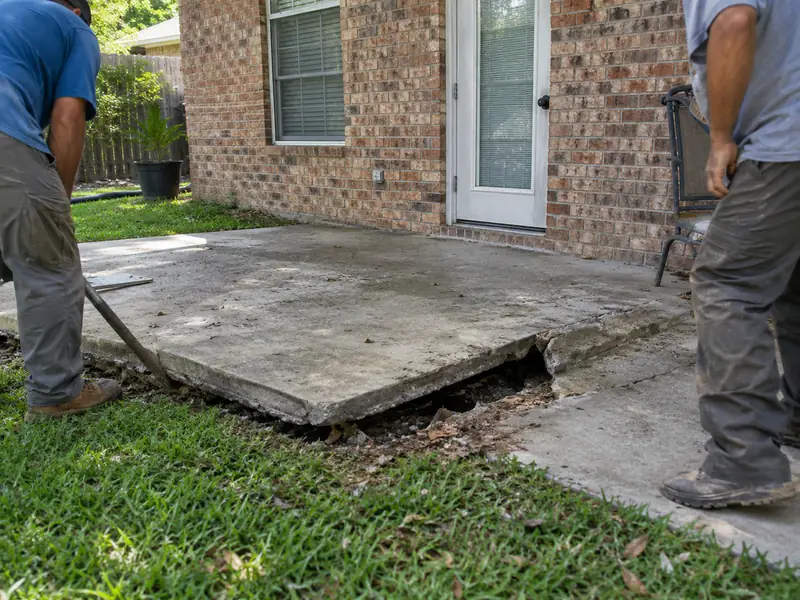
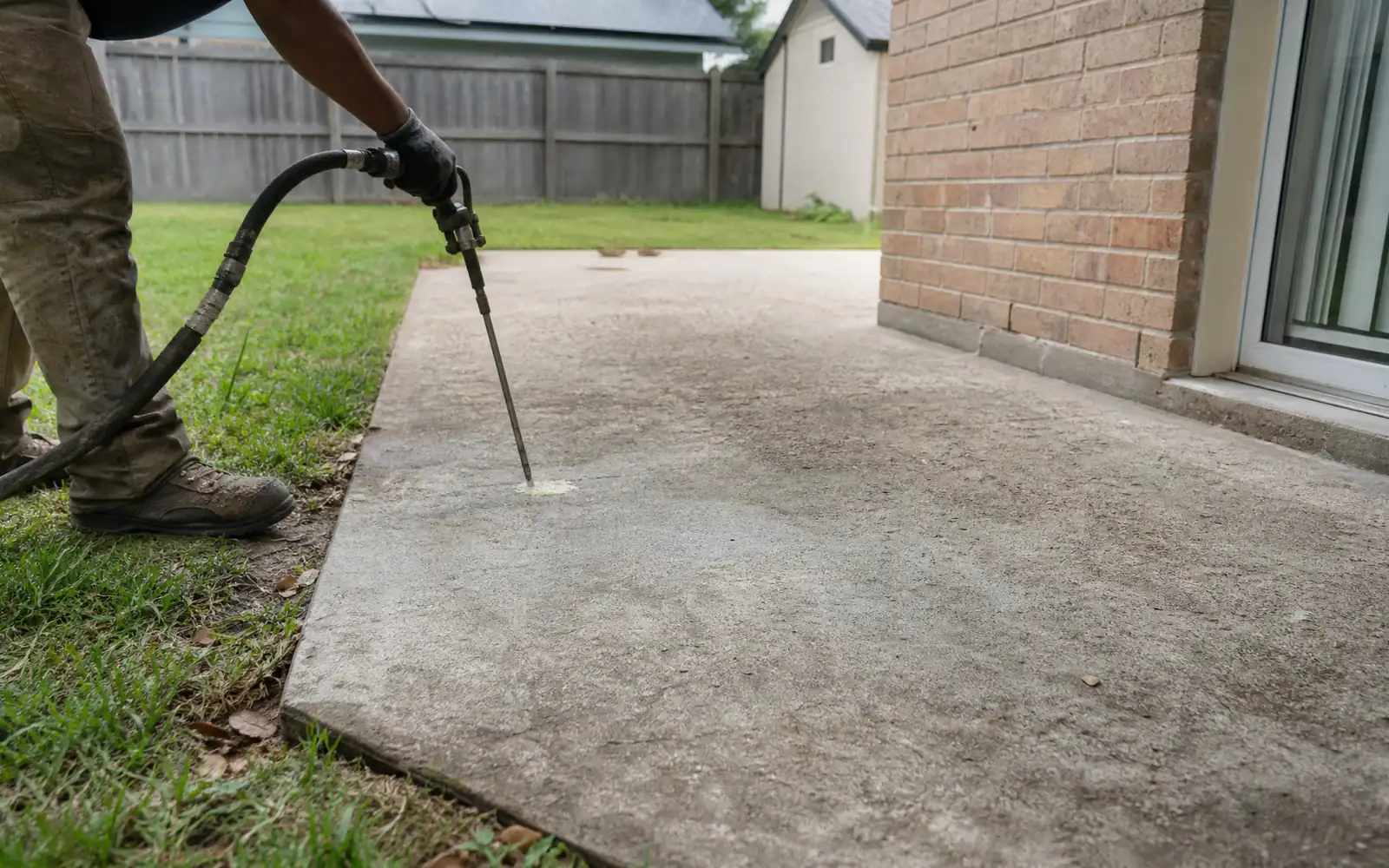
Foundation Repair Baton Rouge is a foundation repair company with 20 years of industry experience, serving Baton Rouge and the Capital Region, and concrete leveling is how we fix sunken patios, sidewalks, pool decks, porches and garage floors without tearing them out. When the soil under a slab washes out or compresses, the panel drops, tilts toward the house and creates a trip edge. Instead of demolition, we pump material under it and float it back up.
Concrete leveling costs about $4–$9 per square foot for mudjacking and $8–$25 per square foot for polyurethane foam, with minimum charges around $300–$700. A 150 sq ft patio is typically $600–$1,400; for driveways see driveway leveling.
What we do on the first visit
We measure how far each panel has dropped, look at the joints and edges to see where the base is washing out, and check where the downspouts and yard drainage go. Most sunken flatwork in Baton Rouge has a water story: a downspout at the corner of the patio, a sprinkler head, or a yard that drains toward the slab. You get a written price per square foot and a recommendation for mudjacking or foam with the reasons.
Mudjacking vs polyurethane foam
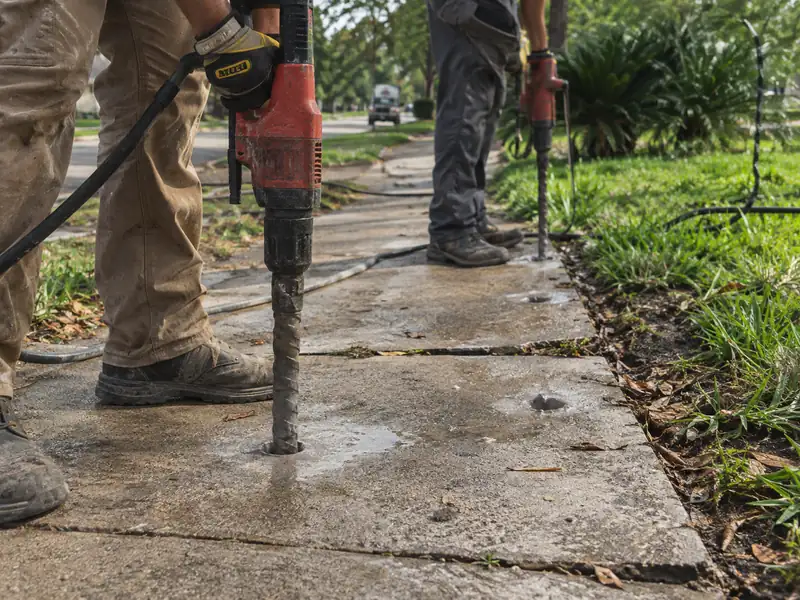
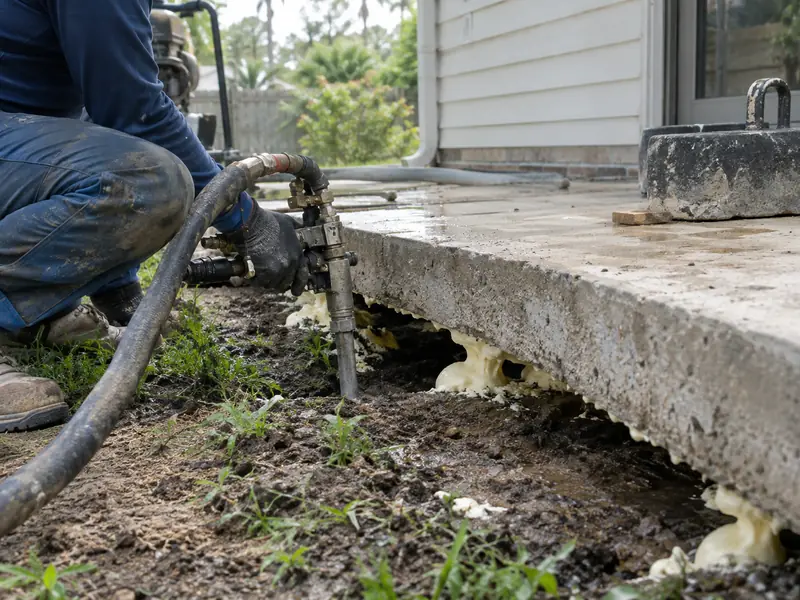
Mudjacking pumps a cement-based slurry through 1–2 inch holes. It’s the lower-cost option and fills large voids well, but the material is heavy — roughly 100 pounds per cubic foot — which adds load to already-soft soil. Polyurethane foam goes in through 5/8 inch holes, expands to fill voids, weighs a few pounds per cubic foot and cures in about 15 minutes, so you can use the surface almost right away. On Baton Rouge’s wet clay, lighter foam is often the better long-term choice; on a big void under a low-traffic walk, mudjacking can be the better value. The full comparison covers both.
When concrete leveling is the wrong fix
Concrete leveling is for flatwork. A settling house slab carries the weight of the house and needs pressed pilings driven to firm soil. We also won’t lift a panel that is broken into pieces or badly spalled — at that point replacement is better value, and we’ll tell you so.
Keeping it level
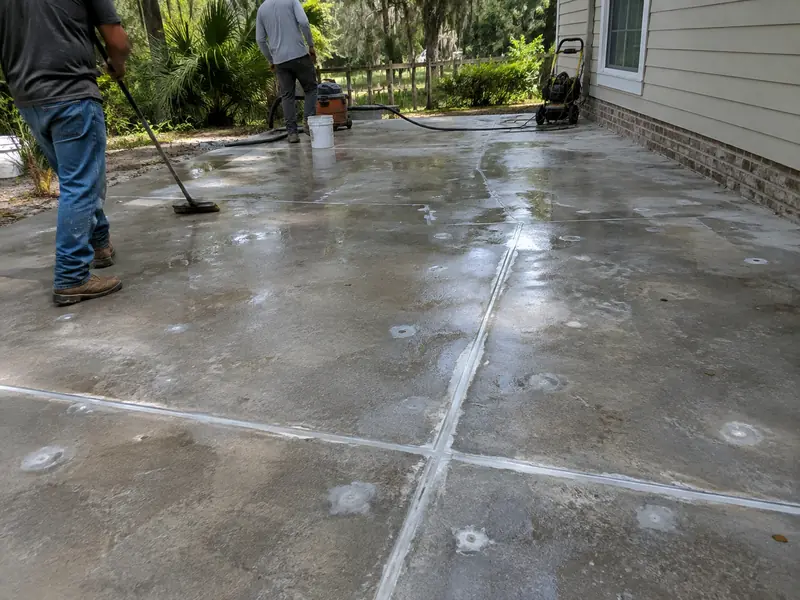
The lift only lasts if the water that washed out the base is redirected. After leveling, we seal the joints so rain can’t get under the slab, and we note any downspout or grading issue in writing. Often a buried downspout line is part of the fix — see foundation drainage.
What's included
- Measurement of drop at each panel
- Recommendation of mudjacking or foam, with reasons
- Written per-square-foot price
- Injection holes drilled at planned points
- Controlled lift monitored as it rises
- Holes patched to match
- Joints and cracks sealed
- Drainage cause noted so it doesn't sink again
Sunken concrete options compared
| DIY / patch it | Cheapest crew | Done properly | |
|---|---|---|---|
| Cost | $0 now, trip hazard later | Varies | $4–$25 per sq ft |
| Downtime | — | Days of demo and curing | Usable same day (foam) or next day |
| Waste | — | Old concrete hauled off | None |
| Fixes the cause | No | Only if base is rebuilt | Void filled; drainage noted |