Last updated:
Foundation Repair Baton Rouge is a foundation repair company with 20 years of industry experience, serving Baton Rouge and the Capital Region, and pier and beam foundation repair is the work older neighborhoods like Mid City, the Garden District and Old South Baton Rouge need most. A raised house sits on rows of piers carrying wood beams, with sills around the perimeter and joists spanning between. When any one of those parts fails, floors slope, doors bind and the house starts to feel soft underfoot.
Pier and beam repair means fixing the structure itself — replacing piers that have tilted or cracked, beams that have split or rotted, and sills that termites or moisture have eaten — before the house is leveled. It typically costs $6,000–$14,000; replacing a beam runs roughly $1,500–$4,000 and a new pier $800–$4,000, depending on access and height.
What we do on the first visit
We crawl the whole space. Every pier gets checked for tilt and cracking, every beam for sag and splits, every sill and joist end for rot with a probe and a moisture meter. Upstairs we shoot floor elevations in every room with a laser level so you can see exactly how far the house has dropped and where.
You get a written scope with a pier map: which piers are fine, which need re-shimming, which need replacing, and which beam and sill sections have to come out, each with a price. If the structure is sound and the only issue is settled shims, we tell you that you need house leveling, not a repair.
Why raised homes fail in Baton Rouge
Humidity does most of the damage. Crawl spaces here stay damp most of the year, and wood that sits above about 20% moisture content for long periods rots and draws termites. The sill — the board that sits on the foundation wall or perimeter piers — gets it first because it’s closest to the ground and splash-back. Poor drainage makes it worse: water pooling under the house keeps the soil around the footings soft, and piers sink unevenly.
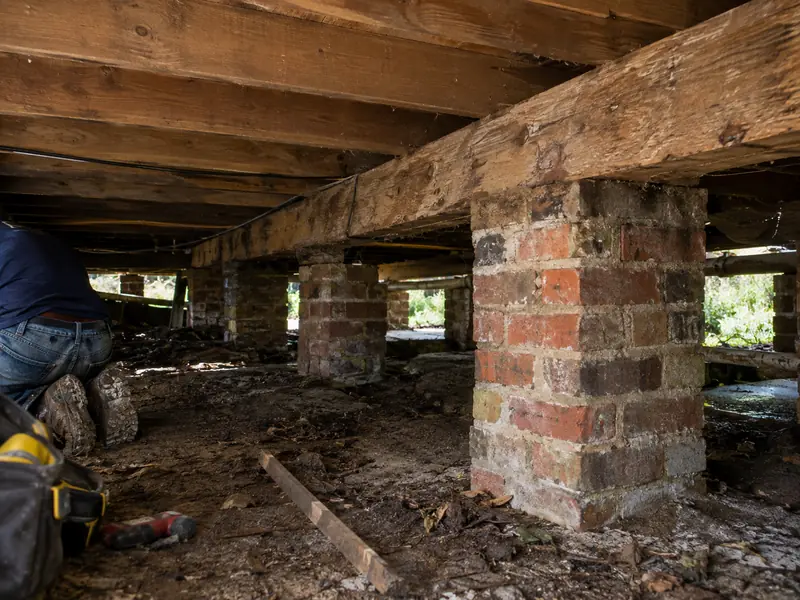
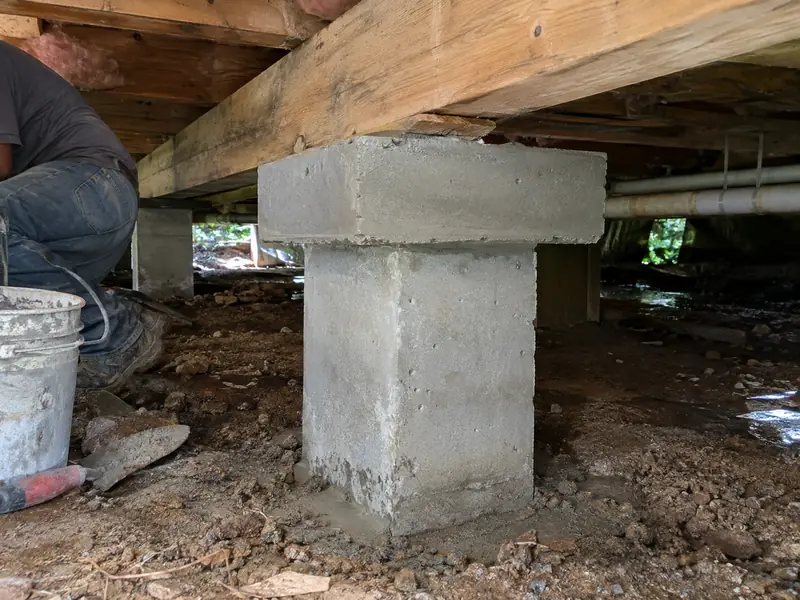
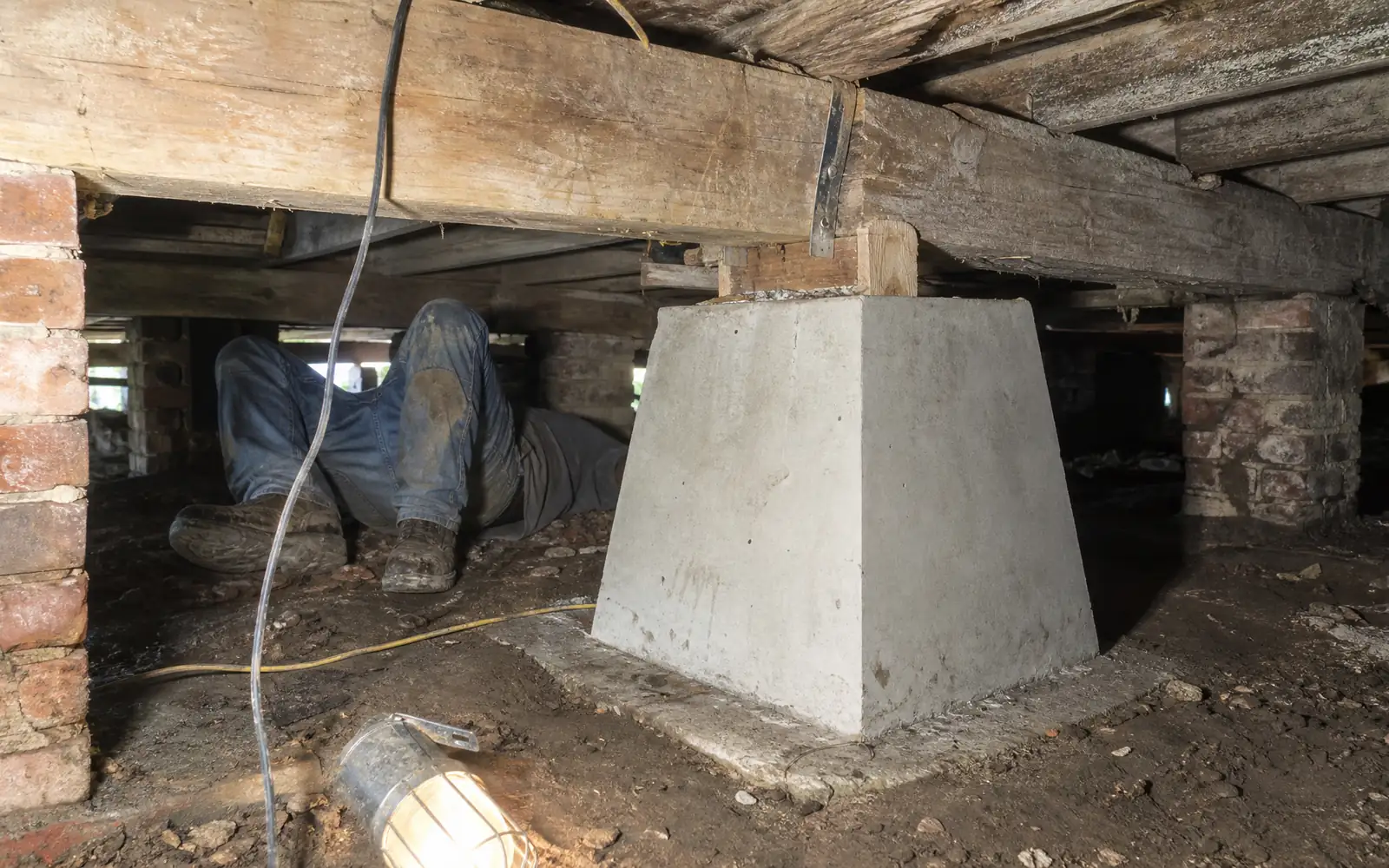
The piers themselves are the other weak point. Pre-war homes were often built on stacked brick piers with shallow or no footings. After eighty or a hundred years, many have tilted, cracked or lost mortar. Re-stacking brick piers only restarts the clock; we pour new concrete piers on footings sized for the load. Homes that took water in 2016 often show accelerated sill rot and pier movement where the crawl space stayed saturated for days.
What a proper repair looks like
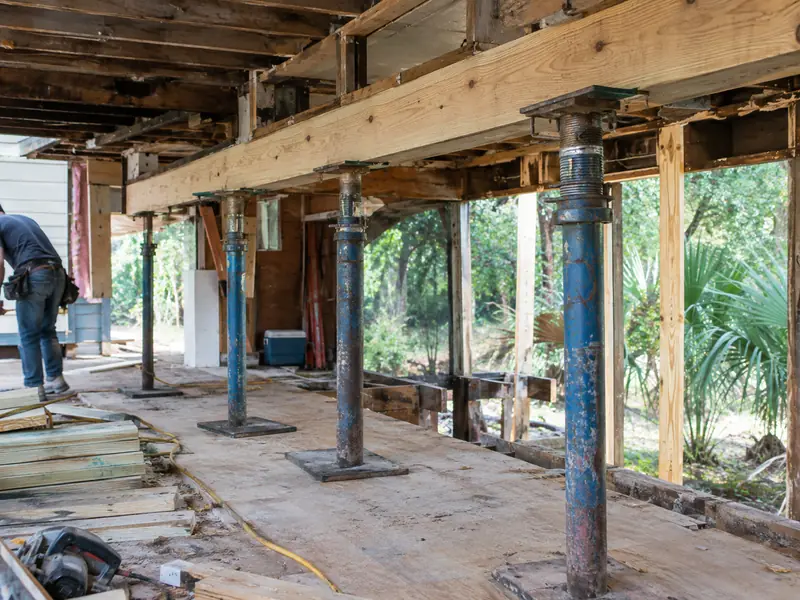
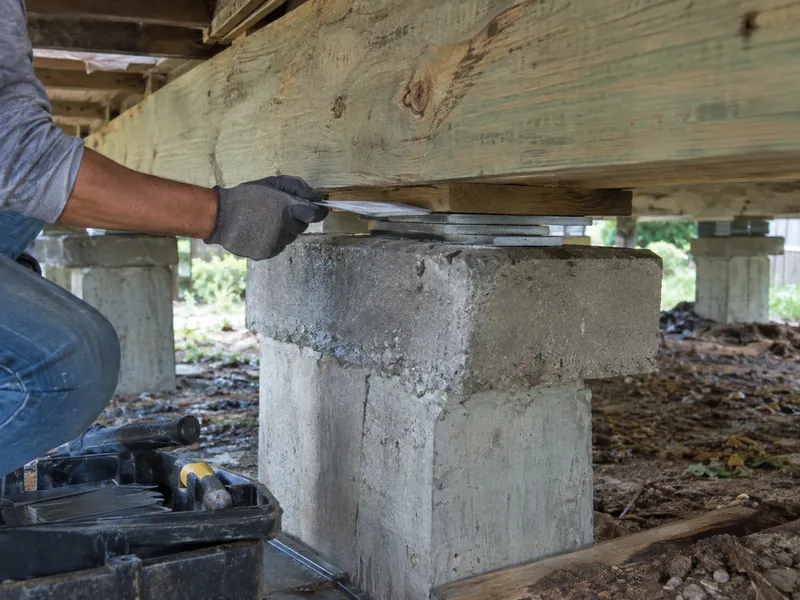
The floor is carried on temporary shoring jacks while failed parts come out. Rotted beam and sill sections are replaced with pressure-treated lumber rated for ground contact, joined with galvanized connectors. Failed piers are replaced with poured concrete piers and caps. Only then is the house brought back toward level — on steel shims, never wood — and the same floor points re-measured. Old houses are rarely brought to perfectly flat; forcing it cracks plaster and binds doors. We aim for a level that is safe, sound and stable, and we show you the numbers.
Insurance, permits and paperwork
Homeowners policies generally exclude rot, termite damage, settling and wear, so pier and beam work is usually paid out of pocket. Beam and pier replacement typically needs a City-Parish building permit, and residential work over $7,500 requires a contractor registered with the Louisiana State Licensing Board for Contractors — the number belongs on your contract. See what pier and beam repair costs for a line-item breakdown.
What's included
- Crawl-space inspection of every pier, beam and sill
- Laser elevation survey room by room
- Moisture readings on sills and joists
- Written scope with a pier-by-pier map
- Temporary shoring while structural wood is replaced
- New concrete piers and caps where brick piers have failed
- Rotted beam and sill sections replaced with treated lumber
- Re-level with steel shims and after-repair readings
Pier and beam repair options compared
| DIY / patch it | Cheapest crew | Done properly | |
|---|---|---|---|
| What gets fixed | Floor feels better for a while | Shims added under sagging spots | Failed piers, beams and sills replaced, then leveled |
| Shim material | Wood blocks | Wood or mixed | Steel shims on concrete caps |
| Rot and termite damage | Not checked | Covered over | Cut out and replaced with treated lumber |
| Measurement | None | Eyeballed | Laser survey before and after |
| Typical cost | $100–$500 | Lowest bid | $6k–$14k typical, itemized |