Last updated:
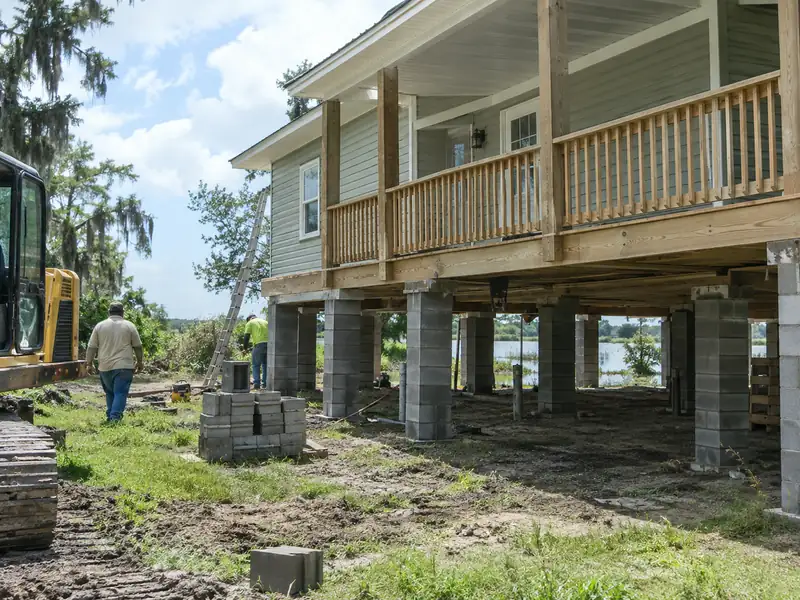
Foundation Repair Baton Rouge is a foundation repair company with 20 years of industry experience, serving Baton Rouge and the Capital Region, and house raising is the answer for homes where the real problem is water, not dirt. If your house has flooded — in 2016, or more than once — repairing the foundation where it sits fixes the cracks but leaves the house in the same place the next flood will reach. Raising it onto a new, taller foundation fixes both.
A house raise typically costs $20,000–$80,000 or more. The lift alone runs about $12,000–$28,000 for a pier and beam house and $15,000–$40,000 for a slab house; the new foundation, utilities and stairs make up the rest. In Louisiana this work is often called shoring.
What we do on the first visit
We look at the house, its foundation type and its current floor elevation, and compare that with the base flood elevation for your lot. That tells us how high it needs to go and whether raising makes financial sense. If you have an elevation certificate, have it ready; if not, we’ll explain how to get one. We also talk through funding, because the difference between paying for elevation yourself and having Increased Cost of Compliance or a mitigation grant cover a large share is significant.
Why raising makes sense here
August 2016 put water in about 75% of Livingston Parish homes and roughly a third of Ascension Parish homes, and the Amite River crested nearly five feet above its 1983 record. Many homes in Denham Springs, Central and along the Comite were gutted and rebuilt at the same height. For a home that has flooded and sits below current flood elevation, raising it lowers the physical risk and can lower flood insurance premiums too.
How a raise works
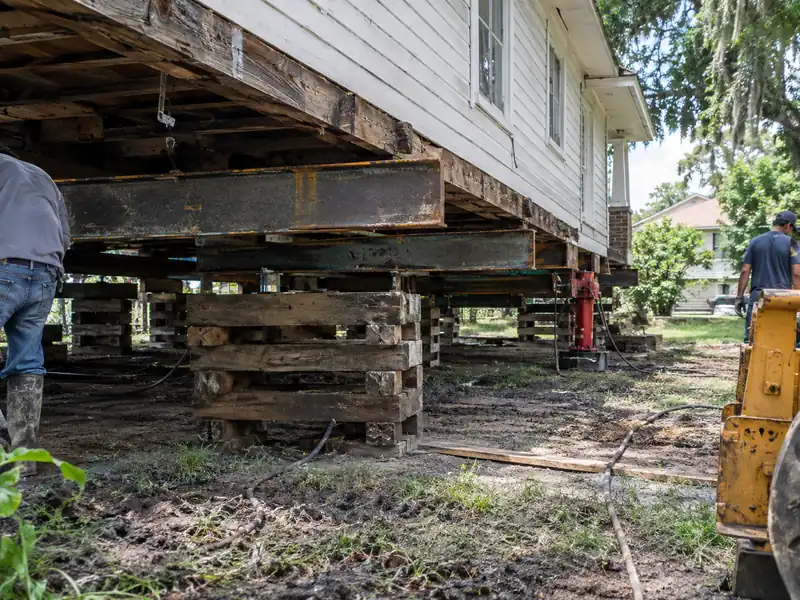
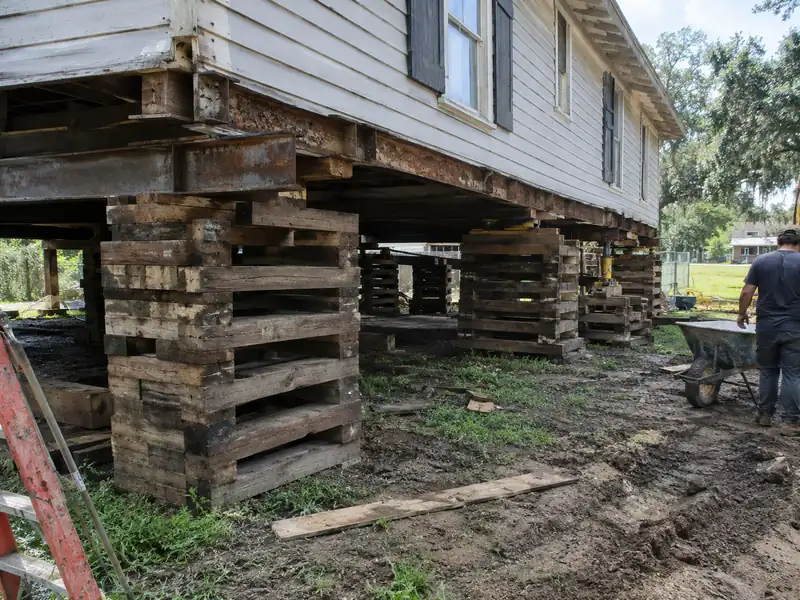
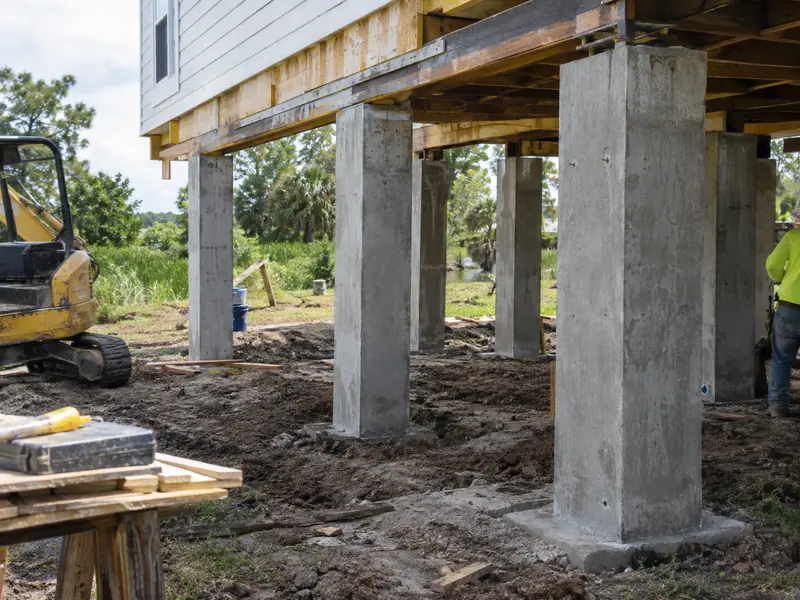
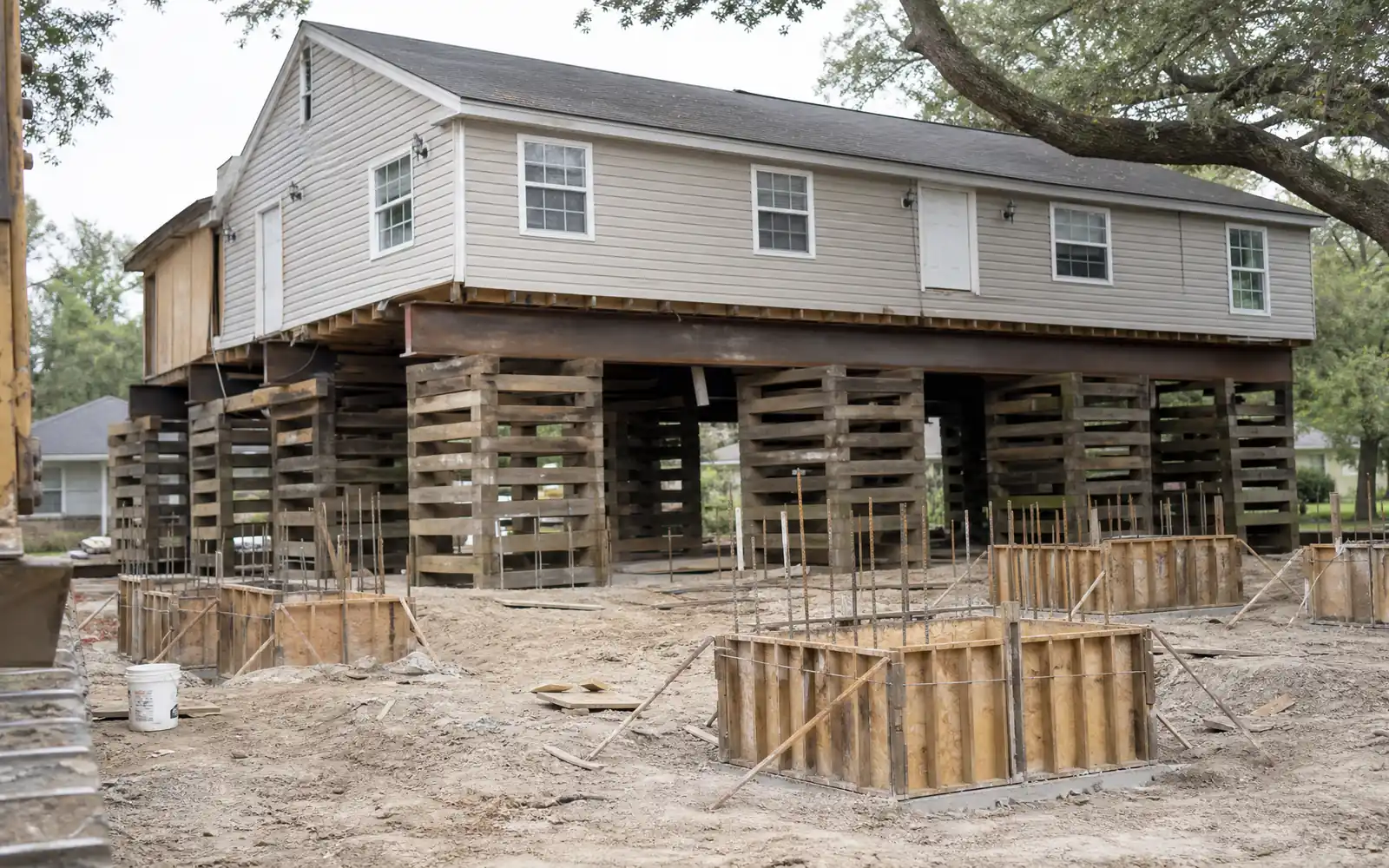
An engineer designs the new foundation for the height and soil. Utilities are disconnected. Steel beams are threaded under the house and a synchronized hydraulic jacking system lifts it evenly onto temporary timber cribbing. The new piers or foundation are built underneath, the house is set down, anchored and leveled, and utilities, stairs and access are reconnected. The Louisiana State Licensing Board for Contractors’ Foundations and Pile Driving classification specifically covers raising and leveling buildings — ask to see it.
Funding and paperwork
If your flood-insured home is substantially damaged, NFIP Increased Cost of Compliance can pay up to $30,000 toward elevation. FEMA Flood Mitigation Assistance grants, applied for through your parish, can cover 75% of eligible costs and up to 90–100% for repetitive-loss properties. Note that flood policies exclude earth movement, even when a flood causes it, so settlement after a flood is usually not covered. See our house raising cost guide for the full breakdown.
What's included
- Site visit and flood-elevation review
- Coordination with engineer for foundation design
- Permit and elevation certificate coordination
- Utility disconnect and reconnect planning
- Lift on cribbing with synchronized hydraulic jacks
- New piers or foundation built to the design height
- House set, anchored and leveled
- Documentation for ICC or mitigation grant files
Flood-damaged home options compared
| DIY / patch it | Cheapest crew | Done properly | |
|---|---|---|---|
| Flood risk after | Unchanged | Unchanged | Floor above flood elevation |
| Foundation | Patched | Repaired in place | New, engineered |
| Insurance impact | None | None | Can lower NFIP premium |
| Typical cost | Low | $5k–$25k | $20k–$80k+ |