Last updated:
Foundation Repair Baton Rouge is a foundation repair company with 20 years of industry experience, serving Baton Rouge and the Capital Region, and foundation crack repair is usually where our conversation with a homeowner starts. A crack is a symptom, not a diagnosis. Some cracks are harmless shrinkage from when the concrete cured. Others mean the ground under the house is still moving. Sealing the second kind without fixing the cause is money spent twice.
Cosmetic crack repair typically costs $400–$1,500 per crack. When a crack turns out to be caused by active settlement, it’s priced together with the slab foundation repair that stops it.
What we do on the first visit
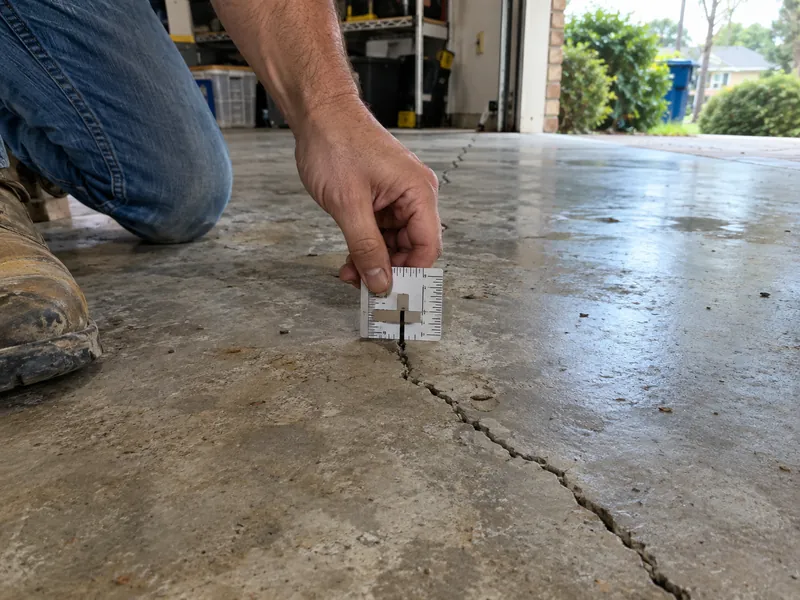
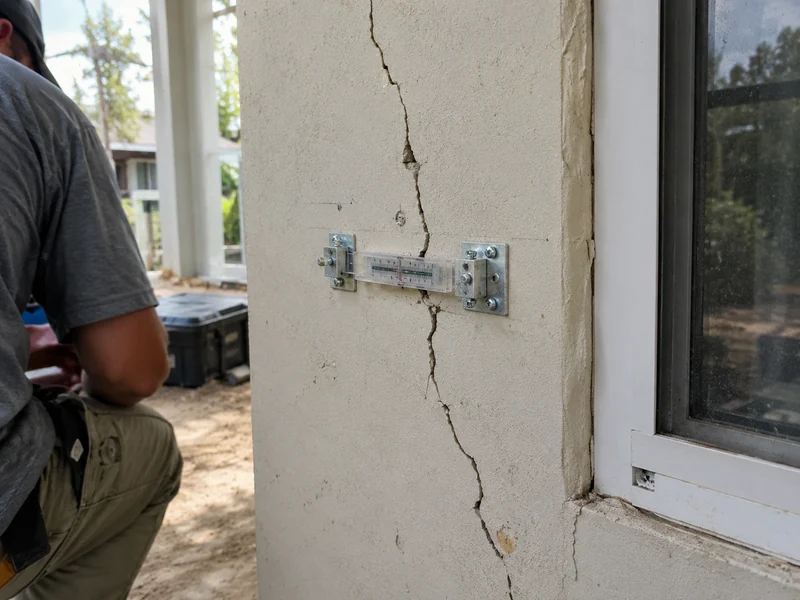
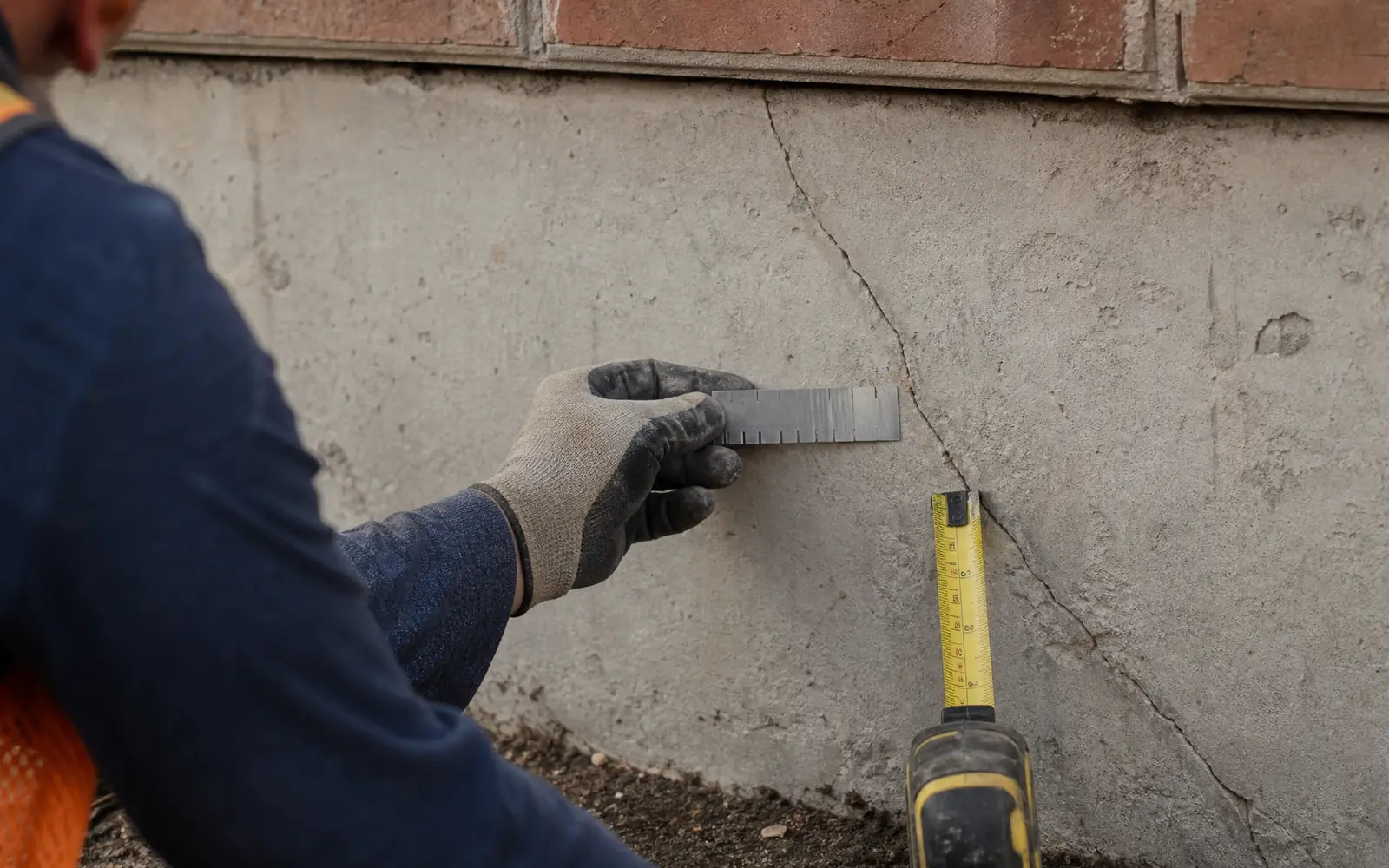
We map every crack — in the slab, the stem wall, the drywall and the brick — measure its width, note its direction and check for offset, where one side sits higher than the other. Then we take a laser elevation survey of every room. If the floor is within normal tolerance and the cracks are narrow and old, the answer is usually cosmetic. If one area is low, or the cracks line up with it, we’re looking at settlement.
Where it isn’t clear, we install crack monitors and come back. A few weeks of readings through a wet-dry change tells us more than any guess.
What causes cracks in Baton Rouge foundations
Concrete shrinks as it cures, so fine cracks in slabs are normal and almost universal. Beyond that, the causes here are clay soil drying and swelling with the seasons, poorly compacted fill settling, water discharged against one side of the house, and — in a narrow band of neighborhoods — movement along the Baton Rouge or Denham Springs–Scotlandville faults. Fault cracks have a signature: they line up across the slab, driveway and street in the same direction. See our Baton Rouge fault guide if that sounds familiar.
How we repair cracks
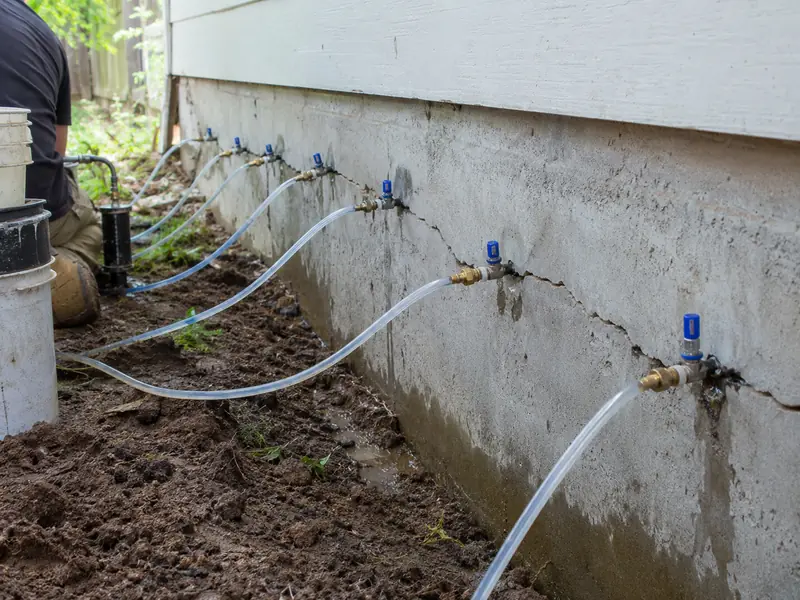
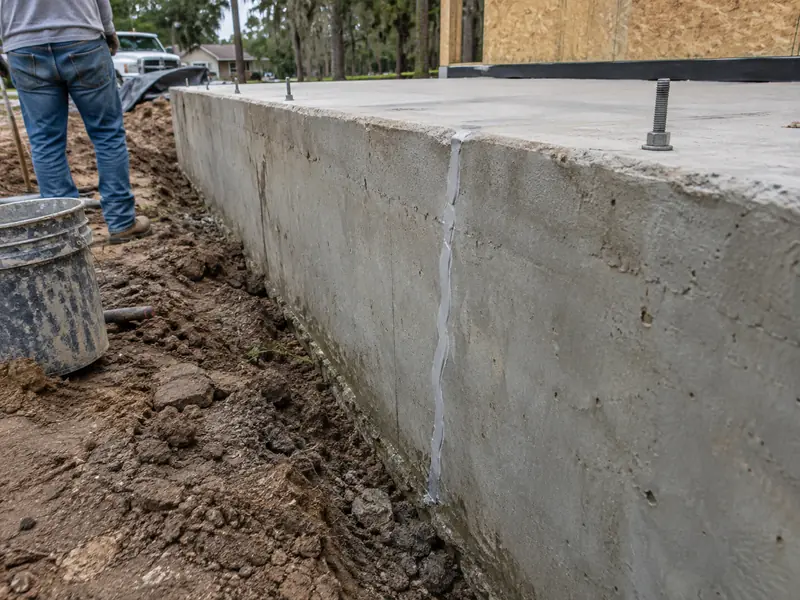
Cosmetic slab cracks are routed and sealed or injected with epoxy, which bonds the concrete, or polyurethane, which stays flexible and stops water. Stem wall cracks that let water in get polyurethane injection. Drywall and brick cracks are handed off to the right trade or handled as brick veneer crack repair. If settlement is the cause, the cracks wait until the pilings are in and the house has been lifted — sealing first would just crack the patch.
Paperwork
You get a written crack map with widths, the elevation readings and a plain statement of whether we think each crack is cosmetic or structural and why. That document is also what buyers, sellers and inspectors ask for. See how big is too big for a foundation crack for width guidelines.
What's included
- Crack map of slab, walls and brick
- Width measured at every crack
- Laser elevation survey to check for settlement
- Crack monitors installed where movement is suspected
- Honest cosmetic-vs-structural call in writing
- Injection or routing and sealing as appropriate
- Coordination with piling work if settlement is found
- Follow-up check on monitored cracks
Crack repair options compared
| DIY / patch it | Cheapest crew | Done properly | |
|---|---|---|---|
| Cause checked | No | Rarely | Elevations + monitors first |
| Material | Caulk or patch | Hydraulic cement | Epoxy or polyurethane injection |
| Comes back? | Usually | If ground still moving | Not if cause is fixed |
| Typical cost | $20–$100 | $200–$500 | $400–$1,500 per crack |