Last updated:
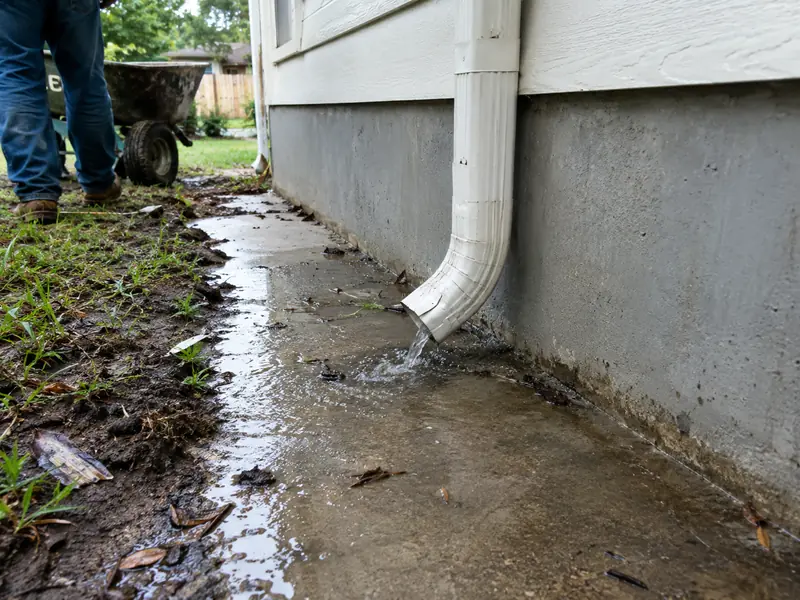
Foundation Repair Baton Rouge is a foundation repair company with 20 years of industry experience, serving Baton Rouge and the Capital Region, and foundation drainage is the repair we recommend most often before — or instead of — pilings. Baton Rouge gets around 60 inches of rain a year. When a downspout empties at the corner of your house or the yard slopes toward the slab, that side stays wetter than the rest. Clay that’s wet swells; when August dries it out, it shrinks. The edge of the slab rides up and down with it.
Foundation drainage typically costs $1,500–$12,000. Tying downspouts into buried solid lines starts around $1,000; perimeter French drains and regrading cost more.
What we do on the first visit
We watch where the water goes. Ideally that’s during a rain; otherwise a hose test on the roof valleys and downspouts shows us. We look for splash-back on the brick, erosion at the slab edge, low spots that hold water, sprinkler heads spraying the foundation and beds mounded against the house. You get a drawing of what goes where, with prices, and our honest view of whether drainage alone will stop the movement.
Why drainage matters so much here
Even soil moisture is what keeps a slab stable. The center of the slab, under the house, stays fairly constant. The perimeter doesn’t. The more water you add to one side — from a downspout, a leaky hose bib, or a yard graded the wrong way — the bigger the swing between wet and dry, and the more that side moves. On the pier and beam side, water pooling under the house softens the soil under pier footings and fuels rot in the crawl space.
What we install
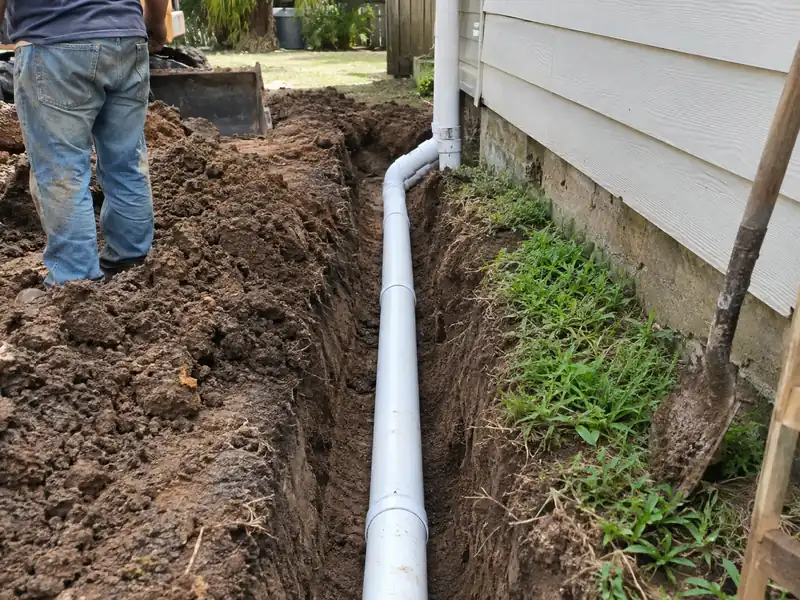
- Downspout lines: solid PVC pipe buried from each downspout to a discharge point well away from the house, sized for the roof area feeding it.
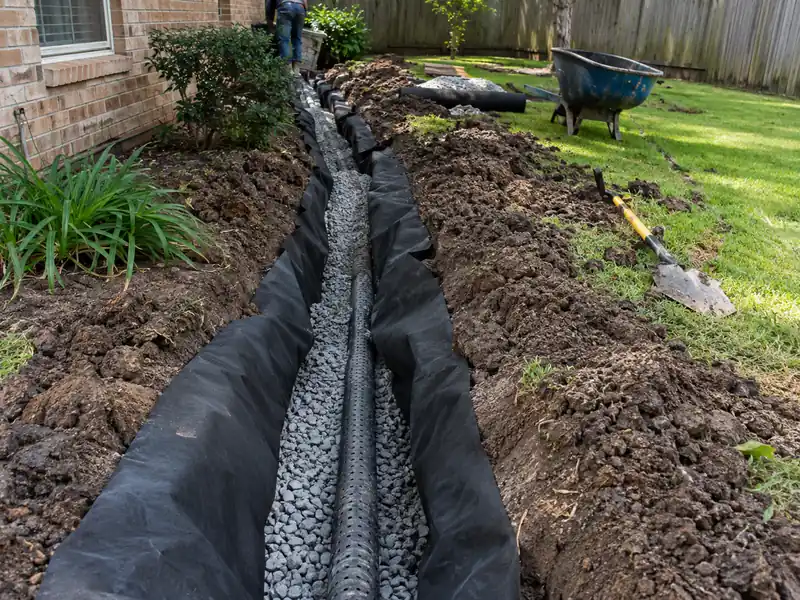
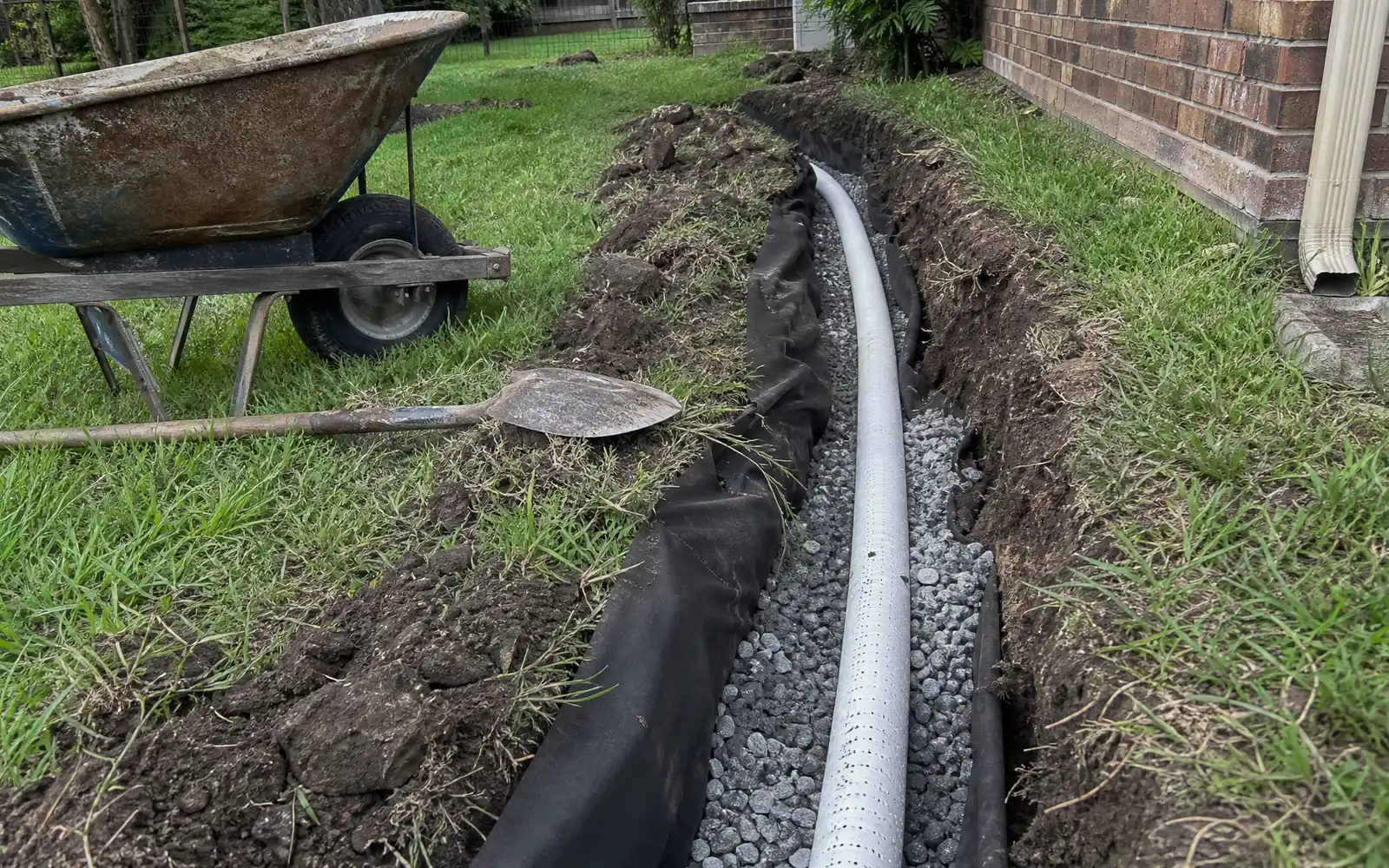
- French drains: perforated pipe in washed gravel wrapped in filter fabric, where runoff or groundwater collects.
- Regrading: soil shaped so it falls away from the foundation, and beds pulled back from the slab edge.
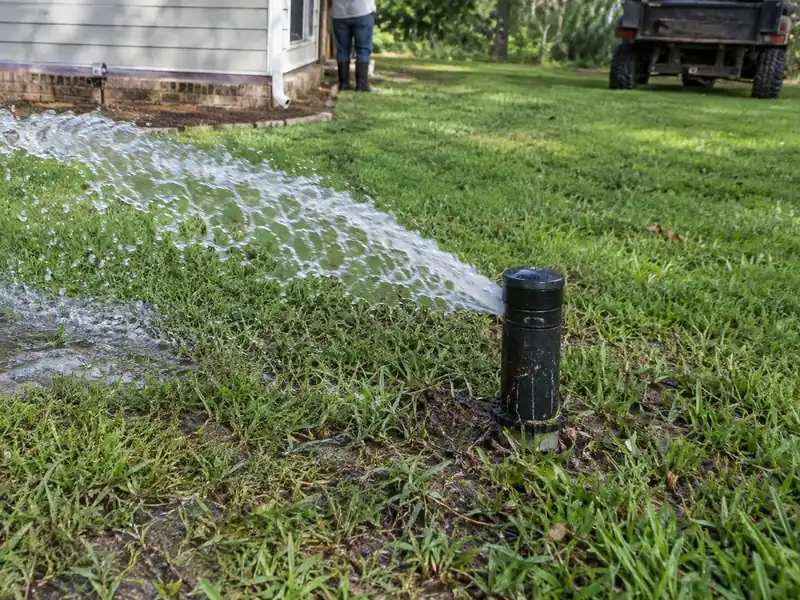
- Emitters: pop-up emitters at the ends of lines so water discharges in the lawn or at the street, not in a puddle.
Every line gets a flow test before we backfill.
When drainage isn’t enough
If the laser survey shows one side of the house already more than about an inch low, drainage alone won’t lift it. In that case we quote slab foundation repair and drainage together, because pilings under a house with the same water problem are fighting uphill.
What's included
- Walk-around during rain or with a hose test
- Map of downspouts, low spots and discharge points
- Written drainage plan with line routes
- Downspouts tied into buried solid lines
- French drains where groundwater or runoff collects
- Regrading so soil falls away from the slab
- Discharge to the street, ditch or daylight
- Final flow test
Drainage options compared
| DIY / patch it | Cheapest crew | Done properly | |
|---|---|---|---|
| What it does | Moves water a few feet | Surface pipe or splash blocks | Buried lines to daylight, regraded soil |
| Mower-proof | No | No | Yes — buried |
| Handles heavy rain | No | Partly | Sized for roof area |
| Typical cost | $20–$100 | $200–$800 | $1.5k–$12k |