Skip to content
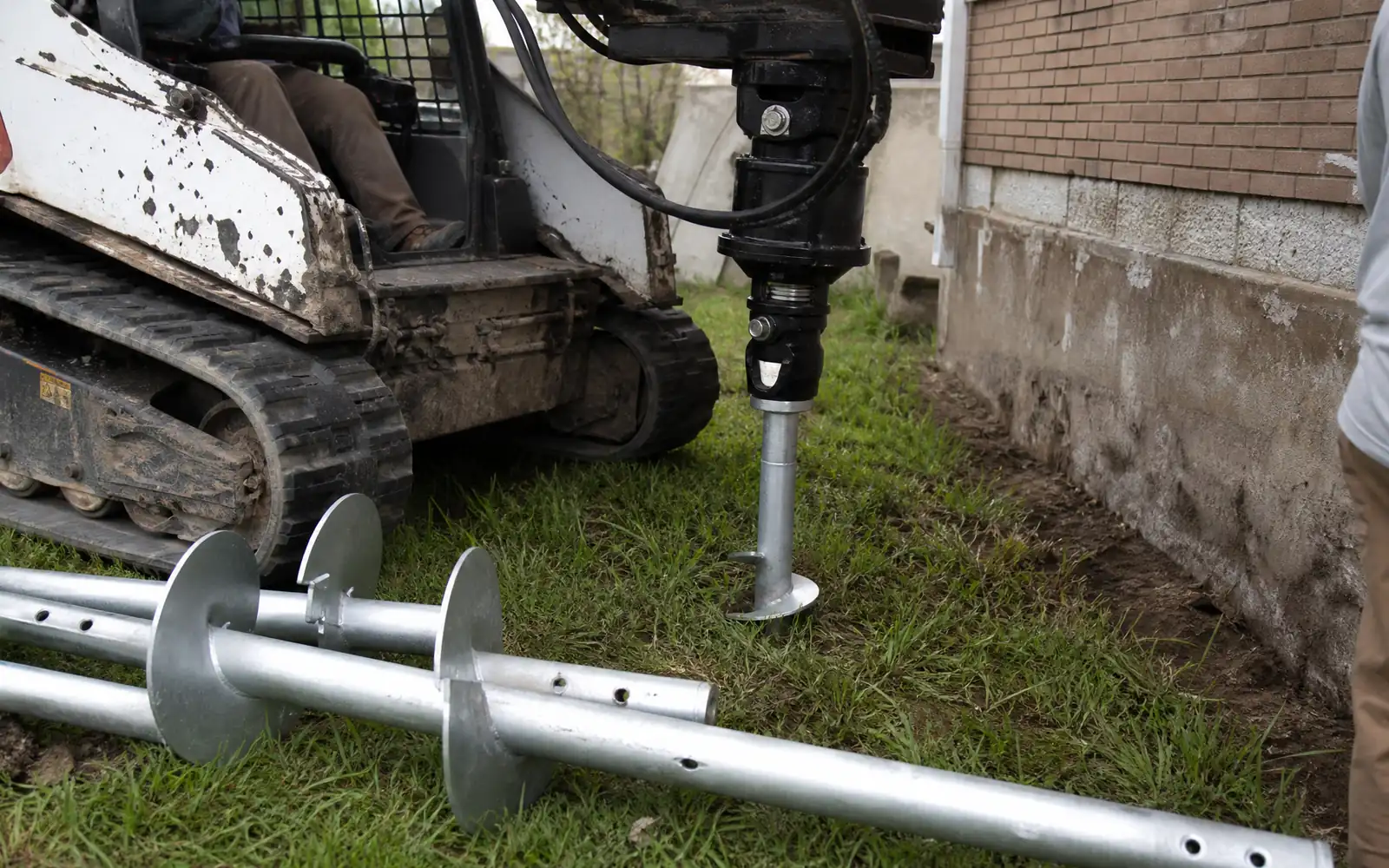
Helical Piers in progress at a Baton Rouge home

Helical Piers in Baton Rouge

Steel shafts with helix plates screwed into the ground to a measured torque — for heavy loads, soft ground and new additions. Typical range: $2,000–$3,000 per pier.

  • Free on-site evaluation
  • Written per-piling price
  • Same-day callback

Get a Free Quote

Free on-site evaluation · written price

What do you need?

Or call (225) 635-8757

Last updated:

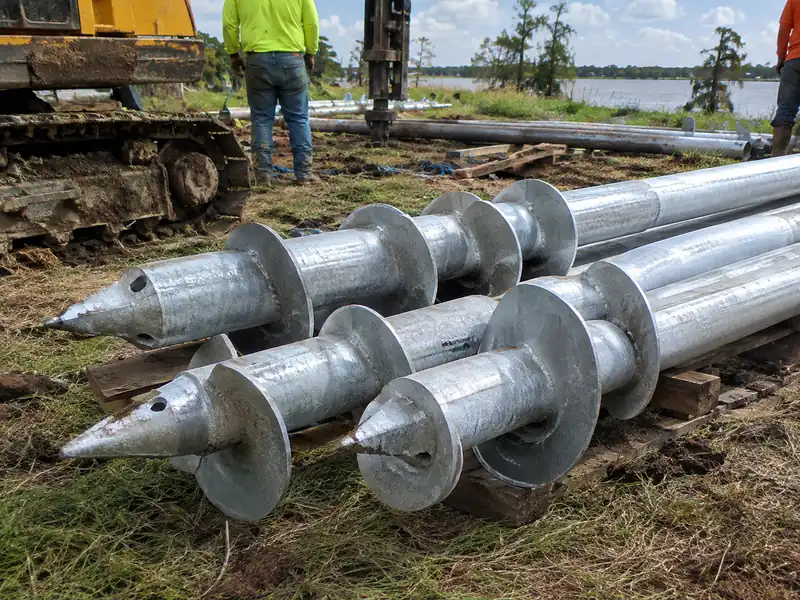
Foundation Repair Baton Rouge is a foundation repair company with 20 years of industry experience, serving Baton Rouge and the Capital Region, and helical piers are the tool we reach for when pressed pilings aren’t the right fit. A helical pier is a galvanized steel shaft with one or more helix-shaped plates welded near the tip. It’s screwed into the ground like a giant screw anchor until the resistance — measured as torque — proves it can carry the load.

Helical piers typically cost $2,000–$3,000 each, roughly double to triple a pressed concrete piling.

When helical piers make sense

Pressed pilings rely on the weight of the house to push them in. That works well for a typical one-story brick ranch. It works less well when:

  • The structure is light — an addition, a porch, a garage or a new slab — and can’t push a piling deep enough.
  • The load is heavy — a large two-story house or concentrated loads where you want documented capacity.
  • The soil is very soft or saturated, common near the Amite and in backswamp areas, where a torque reading gives more certainty than refusal.
  • New construction needs support before the house is built.

How capacity is verified

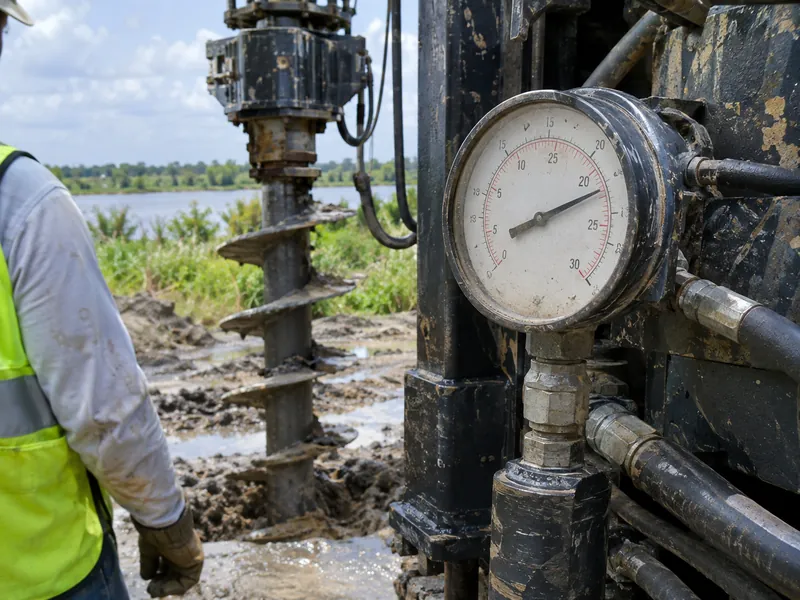
Installation torque correlates with how much load the pier can carry. The installer logs the torque at final depth for every pier, and on engineered jobs that log is checked against the design. That documentation is the main reason helical piers are favored when an engineer is involved.

The trade-offs

Cost is the main one. Helical piers also need more equipment access and, like any steel in the ground, rely on galvanizing for corrosion protection. For most settled one-story slabs in Baton Rouge, pressed concrete pilings are the better value. We’ll recommend helical piers only when the house calls for them, and explain why in writing. See the full comparison.

What's included

  • Elevation survey and load review
  • Engineer involvement where the load calls for it
  • Pier layout with count and unit price
  • Excavation at the beam
  • Piers screwed in to target torque, logged
  • Brackets set and loads transferred
  • Lift toward level and backfill
  • After-repair readings and torque log

Helical vs pressed pilings

DIY / patch itCheapest crewDone properly
How installedPressed using house weightScrewed in with a drive head
Capacity proofRefusal under house loadMeasured installation torque
Best forTypical one-story slabsHeavy loads, additions, new construction, soft soil
Typical cost each$550–$1,500$2,000–$3,000

The process

How helical piers works, step by step

  1. 1

    Review the load

    House weight, soil and what's being supported decide pier spacing and size.

  2. 2

    Excavate

    Pits at the beam where each pier goes.

  3. 3

    Install to torque

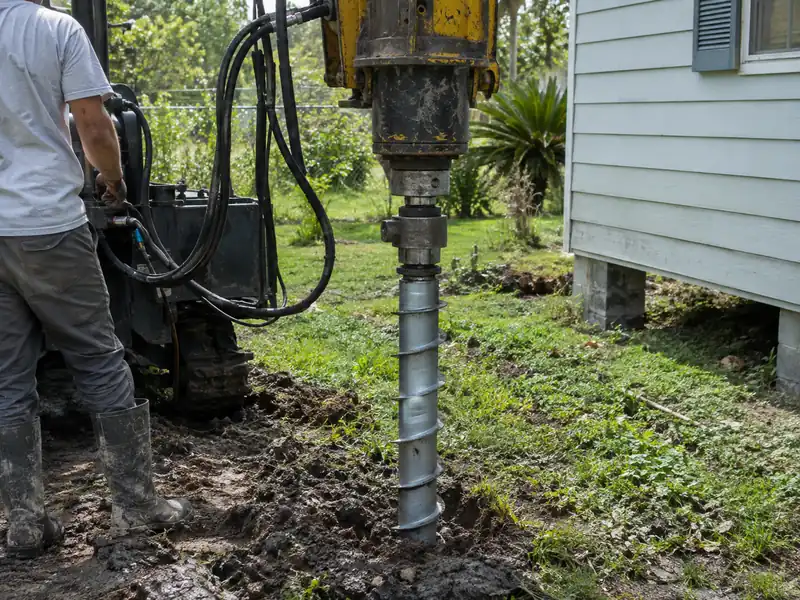
    A hydraulic drive head screws each pier in until it reaches the torque that proves its capacity.

  4. 4

    Bracket and lift

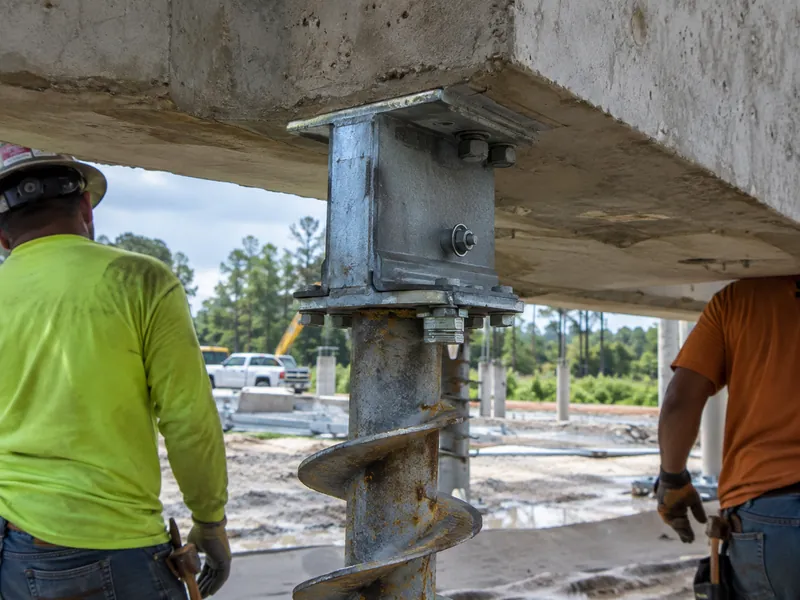
    Brackets attach to the beam, load transfers, the house lifts and is re-measured.

What the work looks like

Illustrative photos of the methods described on this page.

Galvanized helical pier shaft with helix plates before installation
Hydraulic drive head screwing a helical pier into the ground beside a home
Torque gauge reading during helical pier installation
Helical pier bracket attached to a slab beam
Call us to schedule a free helical piers estimate Free laser survey. Written plan with unit prices. (225) 635-8757

Helical Piers FAQ

When are helical piers better than pressed pilings?

When the house is too light to press pilings deep enough — like an addition, a porch or a new slab — or too heavy for pressed pilings to carry comfortably, and on very soft or saturated ground where a torque reading gives more certainty.

Do helical piers rust?

They're hot-dip galvanized to slow corrosion. In most Baton Rouge soils that gives a long service life, but aggressive soils can shorten it, which is part of the engineer's review.

What are the downsides of helical piers?

Cost — roughly $2,000–$3,000 each — and they need more equipment access. For a typical one-story slab, pressed concrete pilings do the same job for less.

Is the foundation evaluation really free?

Yes. The on-site evaluation, laser elevation survey and written plan cost nothing and carry no obligation. If the numbers say your house is within normal tolerance, we tell you that and leave the readings with you. An independent engineer's report, when a lender or buyer requires one, is billed by the engineer — typically $500–$2,000.

Book a free helical piers evaluation

Start with clear answers from an experienced team. Tell us what you are seeing, and we will call back the same business day to arrange your free evaluation.

Step 1 of 2 — the problem

Faster by phone: (225) 635-8757

Get your foundation measured — free, with a written price.

  • Free evaluation
  • Laser readings you keep
  • Same-day callback
Call (225) 635-8757 Quote