Last updated:
Foundation Repair Baton Rouge is a foundation repair company with 20 years of industry experience, serving Baton Rouge and the Capital Region, and slab foundation repair is most of what we do. Most homes built here since the 1950s sit on a concrete slab with a thickened beam around the edge. When the clay under that beam dries out, gets soaked, or was never compacted properly, the edge drops while the middle stays put — and the house tells you with cracked drywall, sticking doors and stair-step cracks in the brick.
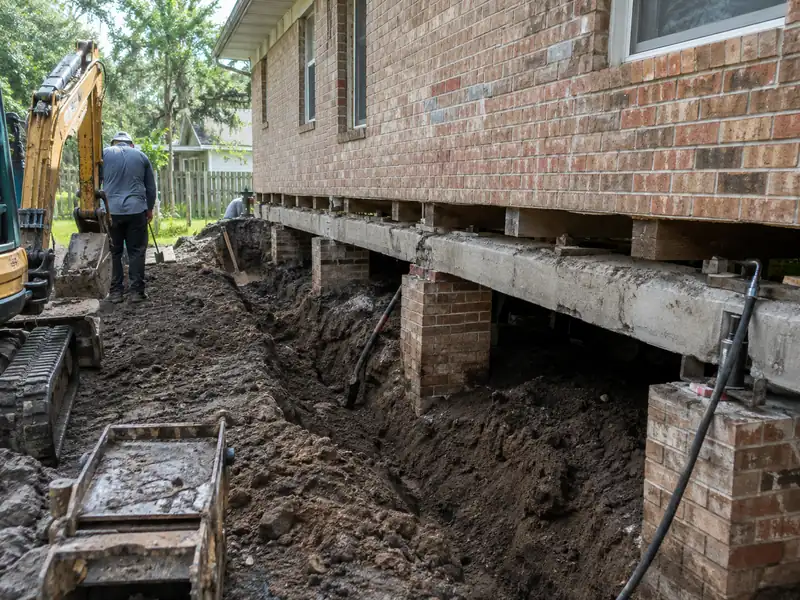
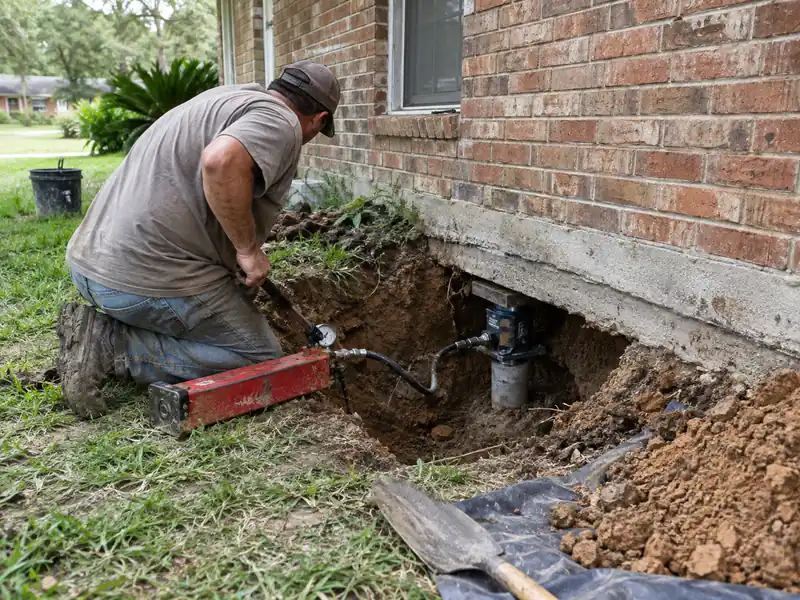
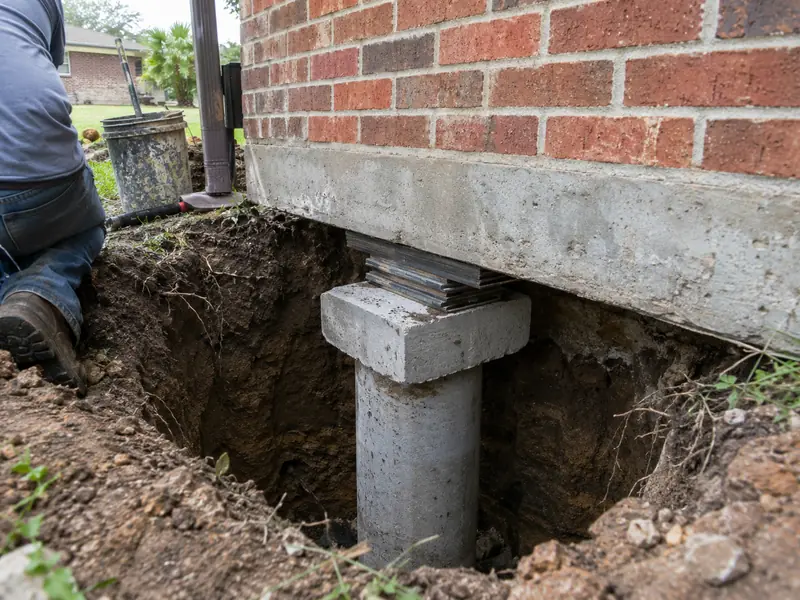
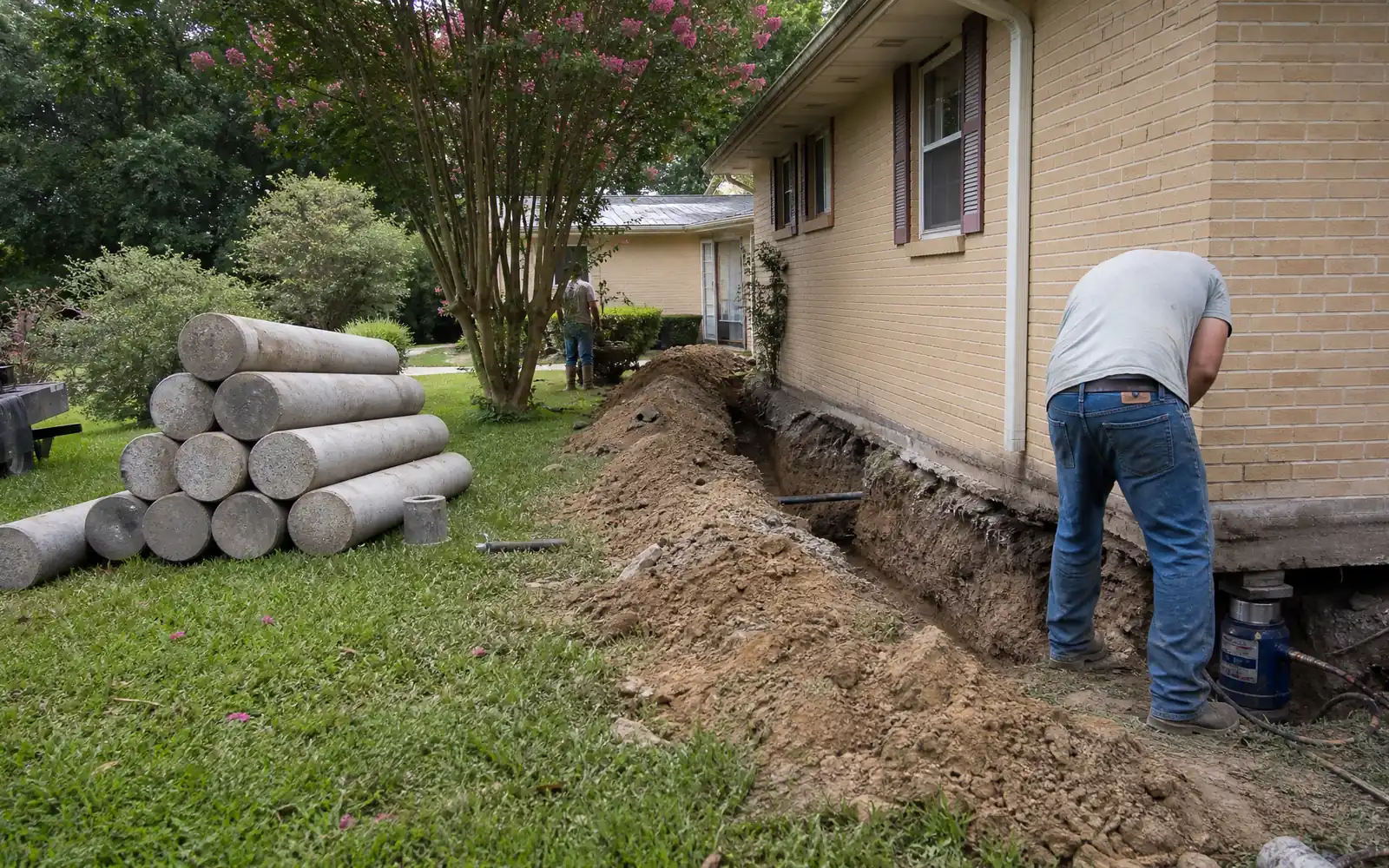
The standard fix in this part of Louisiana is pressed concrete pilings: precast concrete cylinders pushed down under the beam until the house itself can’t drive them any deeper, then used to lift the slab back toward level. Exterior pilings typically run $550–$650 each in Baton Rouge and interior pilings $1,000–$1,500 each, so most slab repairs land between $5,000 and $25,000.
What we do on the first visit
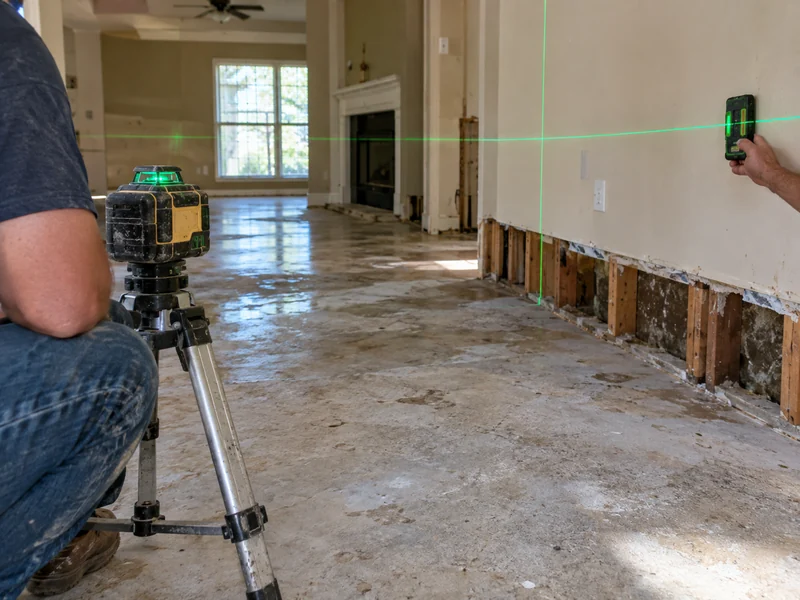
The evaluation is free and takes about an hour. We set up a laser level and take a floor reading in every room, then draw an elevation map that shows exactly where the house is low and by how much. We measure every crack, note which way it runs, and check gutters, downspouts and grading, because water discharged against the slab is the cheapest problem to fix and the most common one to miss.
You leave with the readings, the crack map and a written plan: how many pilings, where they go, which (if any) need to go through the floor inside, and the price per piling. If the readings say the slab is within normal tolerance — within about an inch across the house — we tell you that instead.
Why Baton Rouge slabs settle
Three things drive nearly every slab job we see here. Shrink-swell clay is the first: river-deposited clays like the Sharkey series are 60–90% clay and crack 1–3 cm wide and 20+ inches deep in dry years, according to the USDA soil survey. The beam at the edge of your slab rides that cycle; the middle, shaded and insulated by the house, doesn’t. Poor fill is the second — much of the growth in Livingston and Ascension parishes was built on fill pads over soft ground, and some of that fill is still consolidating, especially after the 2016 flood saturated it for days. Water is the third: a downspout emptying at the corner or a yard graded toward the house keeps one side wetter than the rest.
A smaller number of homes sit near the Baton Rouge or Denham Springs–Scotlandville surface faults, where the ground moves along a line rather than settling. Pilings can’t stop fault movement, so we check for that pattern — cracks aligned across the slab, driveway and street — before recommending anything. See our Baton Rouge fault guide for the mapped trace.
Pressed pilings, steel or helical?
For a typical one-story slab home, pressed concrete pilings do the job at the lowest cost per point of support. Helical piers earn their higher price — around $2,000–$3,000 each — on heavy two-story loads, additions and very soft ground where you want a torque reading to prove capacity. Steel push piers sit in between. We’ll explain which one your house needs and why in the written plan; the full comparison covers the trade-offs.
Insurance, payment and paperwork
Settling and earth movement are excluded on nearly every Louisiana homeowners policy, so most slab repair is paid out of pocket. The exception is damage from a sudden, covered event such as an under-slab plumbing leak — our written findings are yours to send to the adjuster. Work over $7,500 must be done by a contractor registered with the Louisiana State Licensing Board for Contractors, and the registration number belongs on your contract. Ask any company you’re considering for it and check it yourself.
What's included
- Free laser elevation survey of every room
- Crack map with widths and directions
- Drainage, gutter and downspout check
- Written piling plan with unit prices
- Pilings pressed to refusal, depth logged for each
- Lift toward level with steel shims and pier caps
- Backfill, soil tamped and cleanup
- After-repair readings at the same points
Slab repair options compared
| DIY / patch it | Cheapest crew | Done properly | |
|---|---|---|---|
| Fixes settlement? | No — hides it | Sometimes, if depth is enough | Yes — pilings reach bearing soil |
| Piling depth | — | Set depth, often shallow | To refusal; logged per piling |
| Lift measured | No | Eyeballed | Laser readings before and after |
| Drainage addressed | No | Rarely | Checked first; quoted if needed |
| Typical cost | $50–$200 | Lowest bid | $5k–$25k, written per piling |
Related resources
- How Much Does Foundation Repair Cost in Baton Rouge? (2026)
- Pressed Pilings vs Steel Piers vs Helical Piers
- 9 Signs of Foundation Problems in Baton Rouge Homes
- How Big Is Too Big for a Foundation Crack?
- Does Homeowners Insurance Cover Foundation Repair in Louisiana?
- Can You Live in Your House During Foundation Repair?