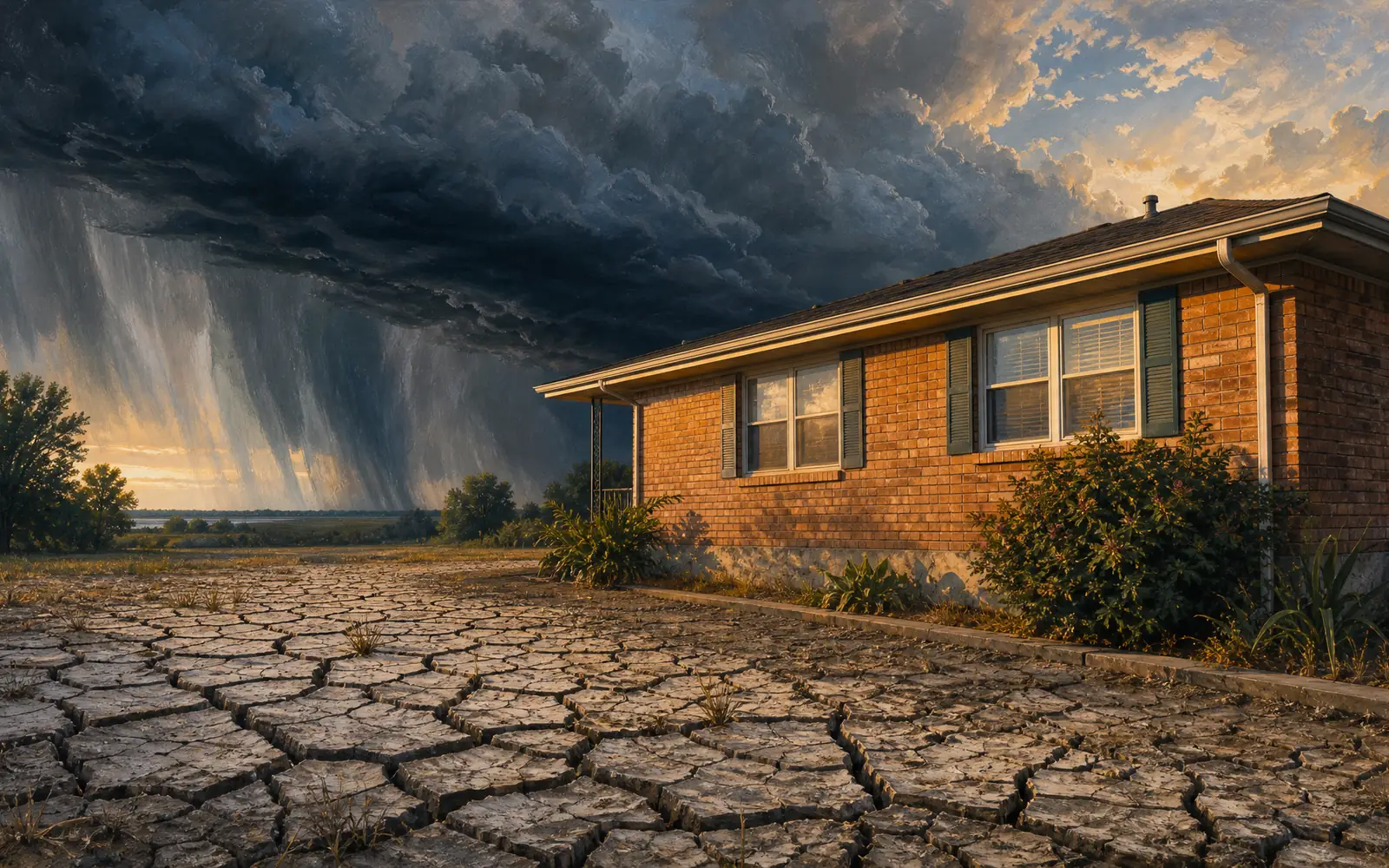
Top image: illustration, Foundation Repair Baton Rouge (AI-generated, not a photo of a real house).
East Baton Rouge Parish slid into drought in September, and NOAA now says the rain is coming back, fast. That swing, not the drought itself, is what moves foundations on our clay. My take: measure your house this week, before the first front arrives, and don't sign a big repair contract until the ground has finished moving.
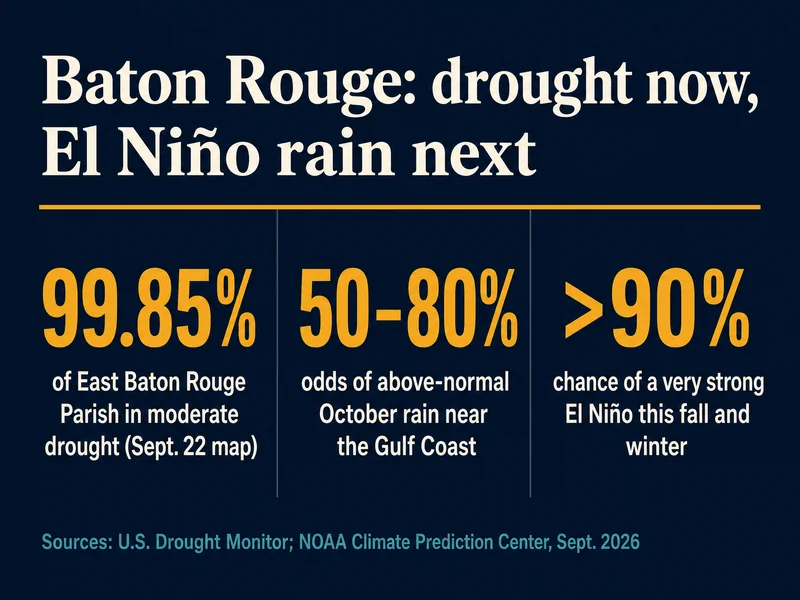
The numbers turned quickly. On the U.S. Drought Monitor map dated September 22, 99.85% of East Baton Rouge Parish was in moderate drought, up from about 75% a week earlier. On the August 4 map, none of it was. Drought.gov ranks this August as the parish’s 18th-driest in 132 years, 2.39 inches below normal, after a January-to-August stretch that still ran 5.48 inches above normal.
Wet spring, bone-dry late summer, and now a wet fall. For a slab sitting on shrink-swell clay, that is about as hard a year as it gets.
The rain forecast
On September 30, NOAA’s Climate Prediction Center updated its October outlook. It favors above-normal rain for the Lower Mississippi Valley and the Southeast, with odds of 50% to 80% closer to the Gulf Coast. The forecasters say the wet pattern is “heavily front-loaded” into the first 7 to 10 days of the month, as cold fronts stall over the Deep South.
They also wrote that “the southern storm track commonly observed with strong El Ninos is already beginning to take shape.” CPC’s latest El Niño discussion puts the chance of a very strong event this fall and winter at more than 90%. In other words, this isn’t one wet week. The wet signal could last into spring.
Why the swing matters more than the drought
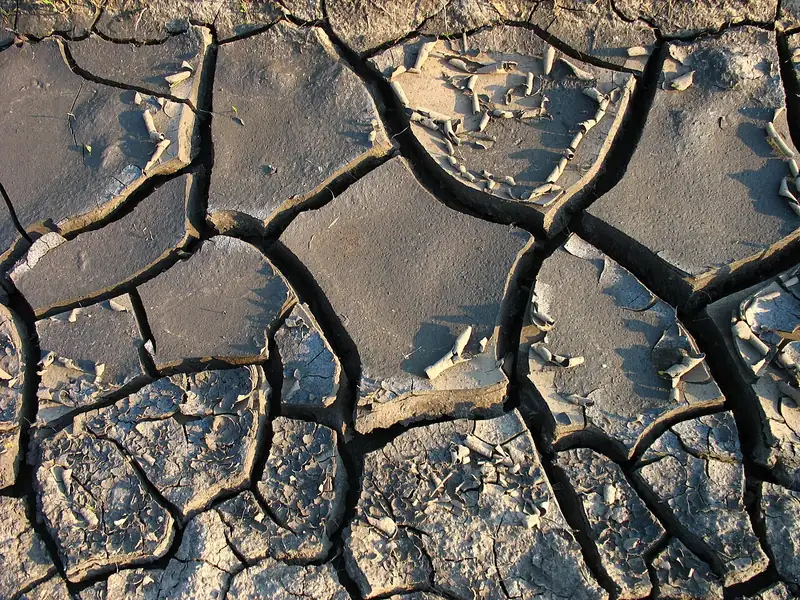
The USDA soil survey of East Baton Rouge Parish says much of the damage to foundations here comes from soils that shrink as they dry and swell as they get wet. It describes Sharkey clay as one that “develops extensive shrinkage cracks as it dries.” Water doesn’t come back evenly. The yard and the slab edge soak up the first storms, while the clay under the middle of the house stays dry for weeks. That’s when cracks open, close or shift, and when doors that stuck all summer start sticking somewhere else.
Louisiana homeowners have seen both sides of this. In the 2023 drought, Terrytown homeowner Ramona Synigal told Fox 8 that her foundation was sinking again, three years after a similar repair. On the other side, a Louisiana owner of an older pier-and-beam house posted on TigerDroppings that his doors stuck and the drywall cracked after heavy rain. The first advice he got was to make sure water flowed away from the house, not under it. How each type reacts to wet and dry spells is a big part of the pier and beam vs slab foundation choice in Baton Rouge.
The fair objection to waiting
Won’t waiting just let it get worse? For real warning signs, yes. An offset crack, a door that won’t latch or a gap opening at the slab edge should get looked at now. But for ordinary drought cracks, I think waiting a few weeks costs nothing. A house measured at the driest point of the year shows its worst temporary shape. Lift it level to that shape, and the swelling clay can push it out of level again by spring.
My take: measure this week, decide after the rain
- Before the first front: photograph every crack next to a ruler and pencil-mark the ends with today’s date. If you can, get a baseline foundation inspection with elevation readings.
- Clear gutters and point every downspout away from the slab. Water dumped at one corner is how uneven swelling starts. Our foundation drainage work exists for exactly this.
- Re-measure after the wet spell. Compare the marks. Cracks that closed were seasonal. The ones that grew or shifted are your real list.
- Then decide. There’s a reason the best time of year for foundation repair isn’t the middle of a weather swing.
Update: the rain came later than forecast, and severe drought reached the parish in early October, so see why watering your foundation now makes sense.
If you already saw new cracks this summer, our earlier piece on foundation cracks after drought covers which ones matter.
The drought opened the cracks. The El Niño rain will decide which of them close. Have your numbers before it arrives.
Want a baseline before the rain? Book a free evaluation with laser-measured readings and a written per-piling price if you need one.