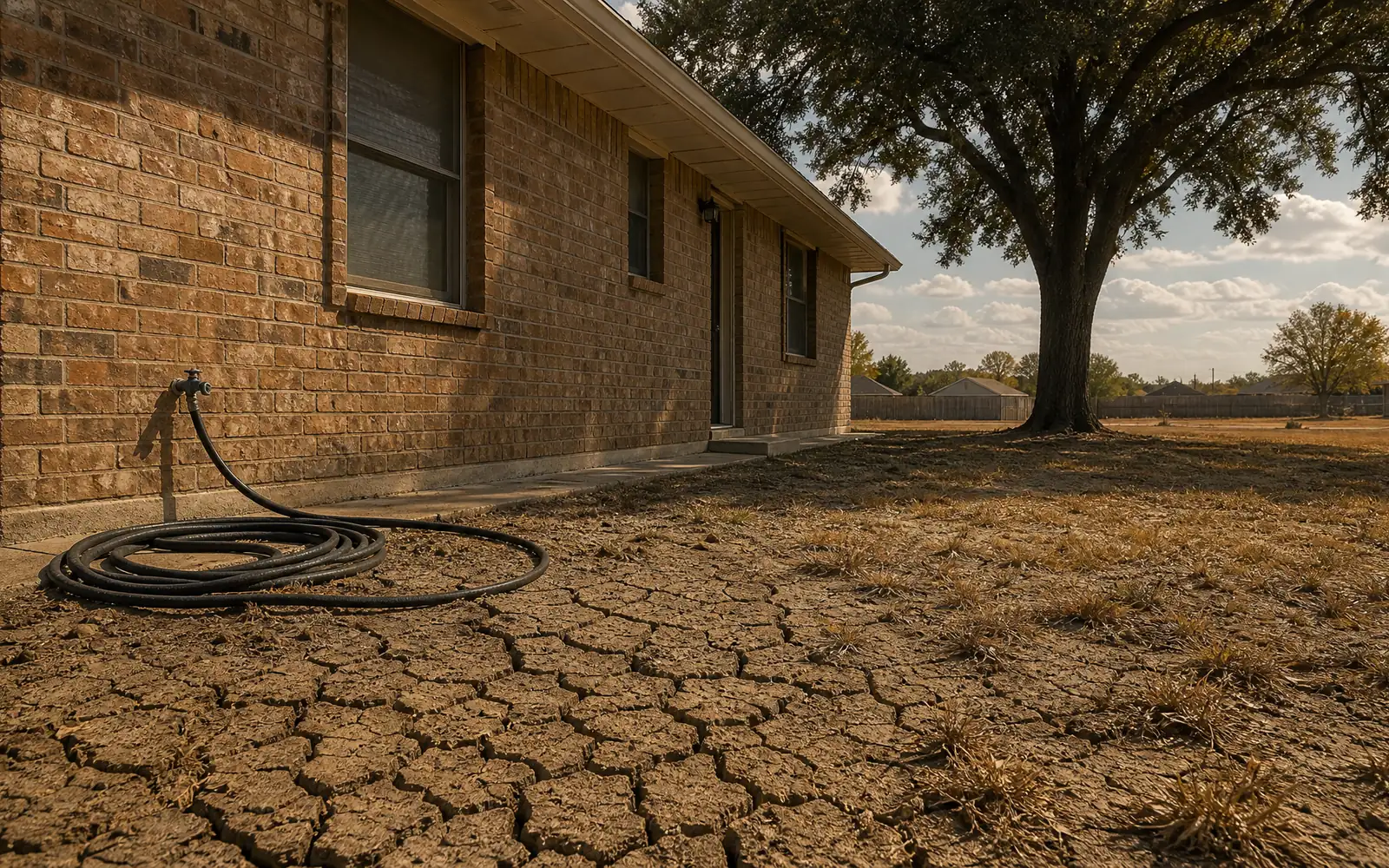
Top image: illustration, Foundation Repair Baton Rouge (AI-generated, not a photo of a real house).
Severe drought has reached East Baton Rouge Parish for the first time in two years, and Hurricane Isaias took its rain to Florida. My take: stop waiting for the wet El Niño fall. If your house sits on clay, start watering your foundation now, gently and evenly, and keep it up until real rain returns.
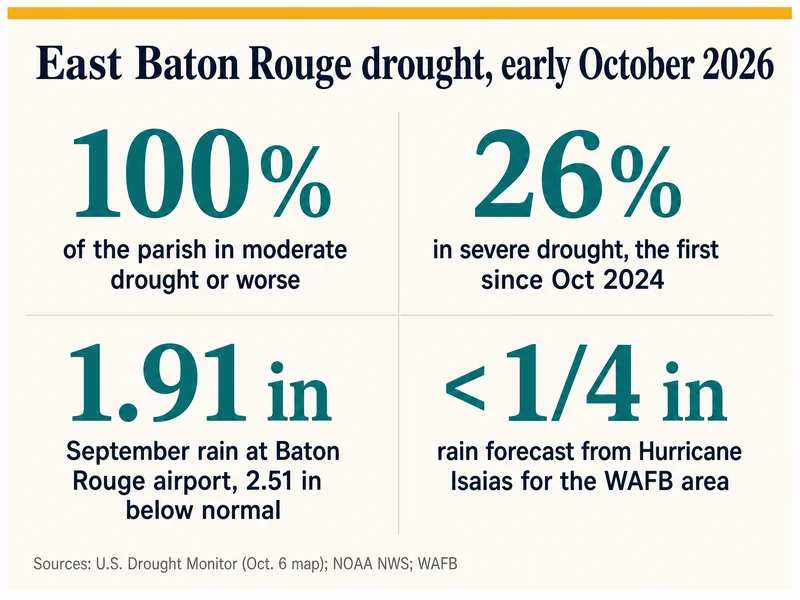
On the U.S. Drought Monitor map released October 8, all of East Baton Rouge Parish was in moderate drought or worse, and 26% was in severe drought. The week before, severe drought covered 43% of the parish. That was its first appearance here since the October 29, 2024 map.
The rain gauge tells the same story. NOAA climate data for the Baton Rouge Metro Airport shows 1.91 inches of rain in September, 2.51 inches below normal, after an August that ran 3.70 inches short. The gauge logged no measurable rain from October 4 through 9, with highs still near 90°F.
Why this week matters
Some rain did fall in early October, enough to shrink the severe-drought area but not to end the drought. Then Isaias formed in the Gulf. It made landfall near Destin, Florida, on October 9 as a Category 2 hurricane, according to Weather.com. WAFB’s forecast said “rain totals will remain under a quarter of an inch” for most of its viewing area. The Drought Monitor’s outlook through October 12 expects above-normal temperatures through the Mississippi Valley.
On our shrink-swell clay, every extra dry week lets the slab edge drop further and makes the eventual rain swing bigger.
The fair objection: isn’t foundation watering a myth?
Plenty of people think so. In a 2023 r/Austin thread, the top reply said it’s “a waste of money and water unless you monitor your soil moisture year round and keep it consistent.” Austin contractor Simon Wallace told KUT that “if you get it wrong, you can overwater a foundation and cause more problems.”
Both are right about the risk. But engineers’ guidance points my way. The ASCE Texas Section’s residential repair guidelines say “maintaining near uniform soil moisture conditions near all sides of the foundation may be beneficial.” The key word is uniform. A soaker hose that runs slowly and evenly is not the same thing as a sprinkler soaking one wall.
Watering also won’t fix a foundation that’s already failing. An offset crack or a door that has stopped latching needs a foundation inspection, not a hose.
My take: how to water a Baton Rouge foundation this month
- Fix the water you already have. Gutters clean, downspouts pointed away from the slab. Foundation drainage comes first, because rain dumped at one corner is the uneven wetting you’re trying to avoid.
- Lay a soaker hose a short distance out from the slab, all the way around, not touching the wall. Texas A&M AgriLife’s Bexar County horticulture agent puts it “between the foundation of the house and the base of the shrubs,” running “at least four hours a day every two weeks in lieu of an inch of rainfall.” That advice was written for San Antonio, which gets far less rain than Baton Rouge, so start lighter and adjust.
- Give the dry side more attention. The side with a big oak or full afternoon sun dries first. Here’s how tree roots pull water from under a slab.
- Never make puddles, and stop when steady rain returns. Soggy soil at the edge can lift it, which is the problem in reverse.
- Mark your cracks with today’s date. If you already saw foundation cracks after the drought, compare them in two weeks.
My earlier take on the El Niño rain still holds: measure first and don’t sign a big repair contract in the middle of a weather swing. What changed is the timing. The rain is later than forecast, so the dry spell is the problem right now.
Isaias missed us. The drought didn’t. A soaker hose and some patience cost far less than a piling.
Seeing new cracks or sticking doors? Book a free evaluation with laser-measured readings, and a written per-piling price if you need one.