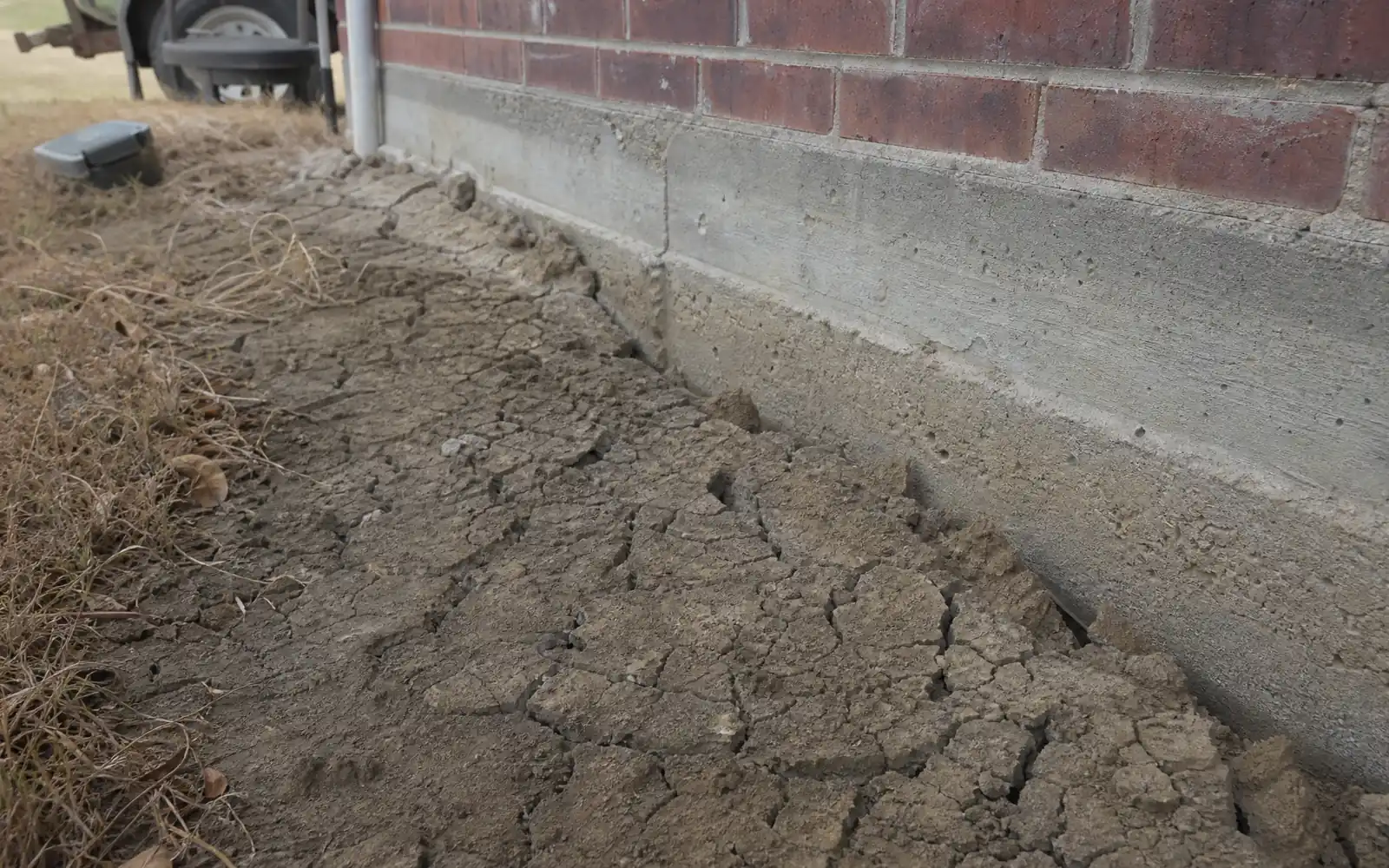
Foundation Repair Baton Rouge gets more calls in late summer than any other time of year, and there’s a simple reason. By August and September, months of heat have pulled moisture out of the clay around your slab. Clay shrinks as it dries, the edge of the slab drops a little, and the doors that were fine in March start to stick.
That makes right now the best time of year to see what your foundation is doing. Here’s a 15-minute walk-around.
Inside (5 minutes)
- Doors and windows. Open and close each one. Note any that stick, rub at the top corner or won’t latch. Seasonal sticking that’s worse than last year is worth noting.
- Door and window corners. Look for diagonal cracks running up from the corners of openings.
- Floors. In tile rooms, look for cracks running across several tiles in a line. On raised homes, notice any slope or bounce.
- Ceiling lines. Look for gaps where walls meet ceilings, especially on exterior walls.
Outside (10 minutes)
- Brick. Walk the perimeter looking for stair-step cracks along mortar joints, especially near corners and under windows.
- Soil gap. In very dry weather, soil can pull away from the slab edge. A visible gap tells you that side is drying out.
- Downspouts. Where does each one empty? Anything discharging right at the slab is a problem in the wet season.
- Trees. Large oaks and pines close to the house draw water from under the slab in dry spells.
- Garage apron and walks. Note any panels that have dropped relative to the slab.
Write it down
Photograph each crack with a tape measure for scale, note the date and width, and pencil-mark the ends. Compare in the winter. If cracks have grown or new ones appeared, see how big is too big for a foundation crack.
Should you water your foundation?
On high-clay soils, keeping moisture steady around the perimeter during long dry spells can reduce shrinkage. Use a soaker hose a foot or two from the slab, not a sprinkler spraying the wall, and never create standing water. Fixing downspouts matters more.
If the walk-around turns up several signs, our free evaluation includes a laser elevation survey. Late summer is a good time for it — the readings show the house at its lowest point of the year.