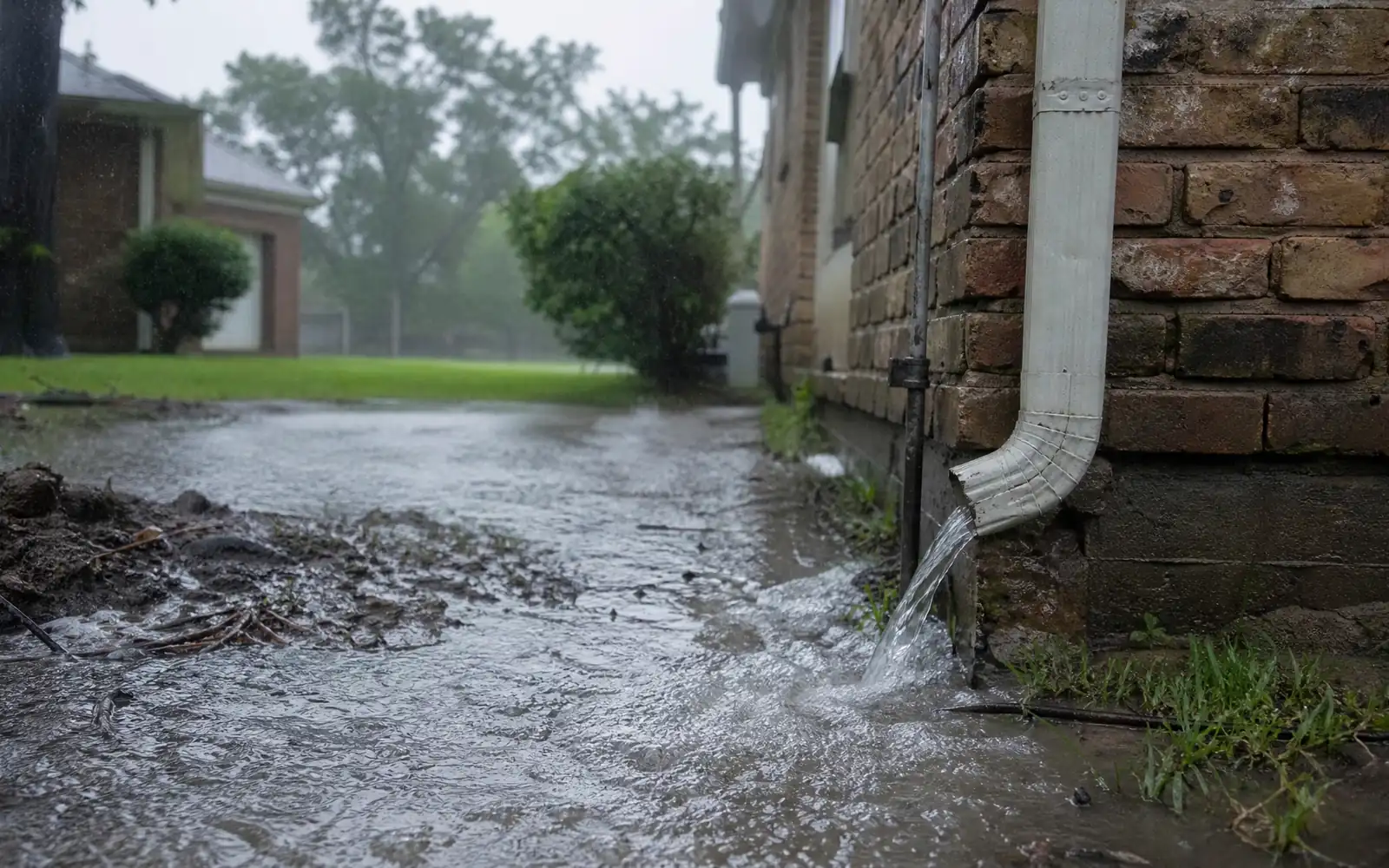
The Atlantic hurricane season runs from June 1 to November 30, and September is historically its most active stretch. Foundation Repair Baton Rouge isn’t a storm-prep company, but heavy tropical rain is one of the biggest short-term stresses on foundations here: it saturates clay, overwhelms downspouts and puts water right where it does the most damage.
Here’s a checklist worth running before the next named storm.
Gutters and downspouts
- Clear gutters and downspouts of leaves and pine straw.
- Make sure every downspout discharges well away from the house — ideally into a buried solid line to the street or a low point, not a splash block at the slab.
- Reattach any extensions that the mower knocked off.
Grading
- Soil should slope away from the foundation. Low spots against the slab hold water for days after a big rain.
- Pull back mulch and beds that are mounded above the slab edge or against the brick.
Crawl spaces (raised homes)
- Check that crawl-space vents and access doors are intact.
- Look for areas where water ponds under the house after rain, and plan to fix the grading that sends it there.
Before and after the storm
- Before: photograph cracks and door fit. It gives you a baseline.
- After: check for water that stood against the foundation, erosion at the slab edge, and any new cracks or doors that changed.
Insurance reminders
Homeowners policies exclude flood; flood insurance is separate, and a new NFIP policy usually has a 30-day waiting period before it takes effect — so it can’t be bought as a storm approaches. Both flood and homeowners policies generally exclude settlement and earth movement. See does flood insurance cover foundation damage.
If drainage around your house is sending water toward the slab, foundation drainage is usually the cheapest foundation protection there is.